

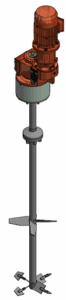


Operation of an AST-MTE Element
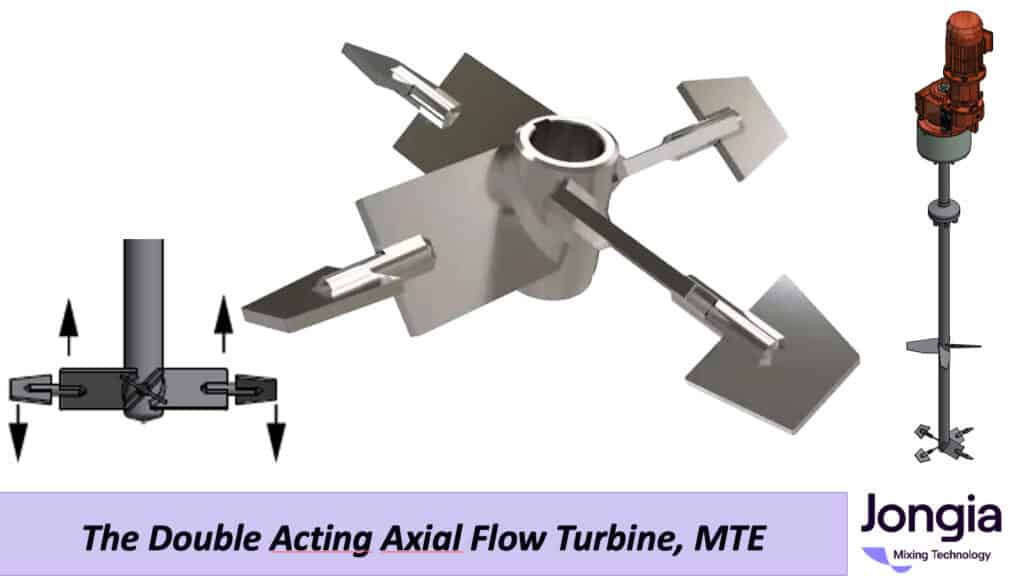
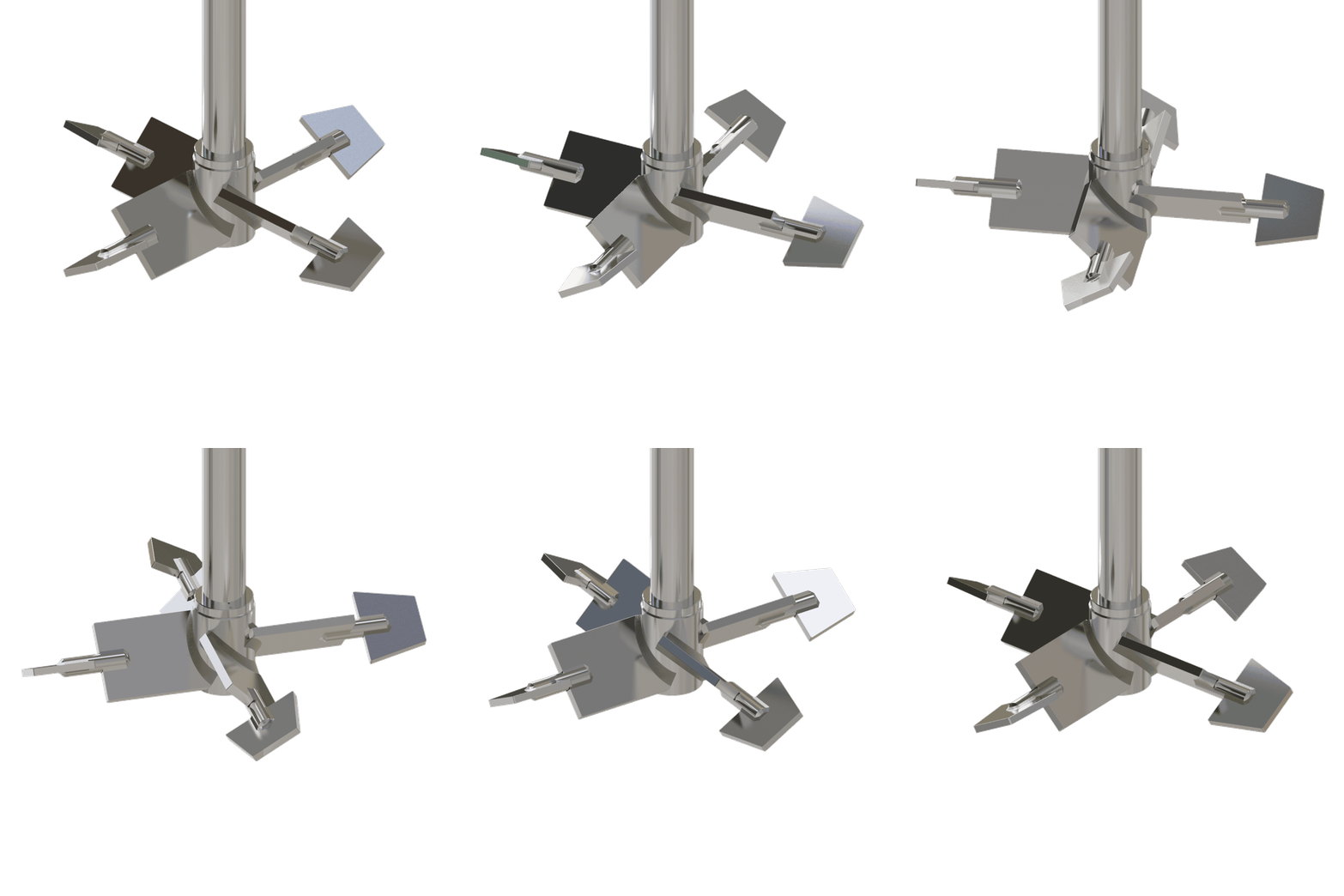
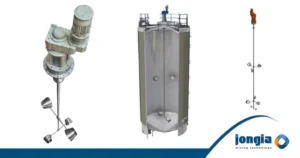
This element can be used in both CW (clockwise) and CCW (counterclockwise) directions. In one case, the inner AST element is downward-pumping with the outer tips pumping upward, and in the other case, it’s the opposite.
This element is highly effective when dealing with a viscous fluid (often with higher density) into which a thin fluid with lower density needs to be mixed.
Examples
- Dye/water in wall paint (latex) to bring product to specification
- Small amount of water in cold fruit (orange) concentrate to achieve the correct Brix number for customer delivery
- Solvent in primer paint to achieve the correct dry solids content
In summary: thin, light fluid into thick, heavy fluid.
Technical Operation
It all starts with a pitched blade mixing turbine as often used in mixing and blending processes. However, in some cases a pitched turbine alone is not always capable of mixing the thin fluid with the thick fluid, therefor sometimes ending us with the thin fluid remaining as a pocket around the turbine mixing element.
Thus, by adding inversely pumping tips on each of the pitched turbine blades, good interaction is achieved between the thin fluid and the bulk fluid at the blade tips, enabling transport of the thin fluid inwards towards the thick fluid. In this configuration, the inner mixing blade is pumping downward and the outer mixing blade is pumping upward.
In more heavily cases where more flow across the bottom of the tankvessel is required (for example, with solids or stagnant zones in the extreme corner), the pumping direction (or configuration or rotation direction) can be reversed to achieve an even better result.
It’s conceivable that some processes require both directions, which can be easily achieved by reversing the direction of rotation.
Key Advantages
- Fast mixing
- Moves smoothly through the fluid surface
- Operates stably
- Simple construction
Benefit
This turbine requires hardly any more power intake if compared to the genuine axial flow turbine Mixing Element.
Is this worthwhile for you process optimization? Give it a try!
Let Jongia help you and contact: sales@jongia.com
Contactez notre équipe spécialisée pour toutes vos questions
Tom Pruymboom
Directeur des ventes
Teun van der Spek
Responsable des ventes régionales
Notre histoire
Depuis la fondation de Jongia en 1937, nous avons évolué structurellement au fil des années. Découvrez l’histoire de notre entreprise grâce au résumé des moments les plus importants mis en avant dans une chronologie.
Related News

Technologie de disperseur à grande vitesse : l’ingénierie derrière un mélange efficace
Guide technique par Jongia Mixing Technology Fonction centrale Les disperseurs à grande vitesse excellent dans trois tâches critiques : Fragmentation des agglomérats de poudre en particules fines Créer une répartition uniforme des poudres dans les milieux liquides Facilitation de la
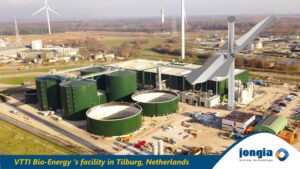
VVTI Biogas Tilburg
VTTI Biogas Tilburg développe une nouvelle installation de bioénergie, axée sur le traitement des déchets organiques. L’usine devrait produire environ 23 millions de mètres cubes de biogaz par an. Une partie de ce montant sera convertie en gaz vert pour
Homogénéisation et refroidissement dans la production de crème laitière
Utilisation du mélangeur de tasses de Jongia’s Cup L’homogénéisation est une procédure standard utilisée dans la production de crème laitière afin d’assurer une répartition cohérente des globules de graisse dans le lait et la crème. Ce processus, réalisé grâce à