


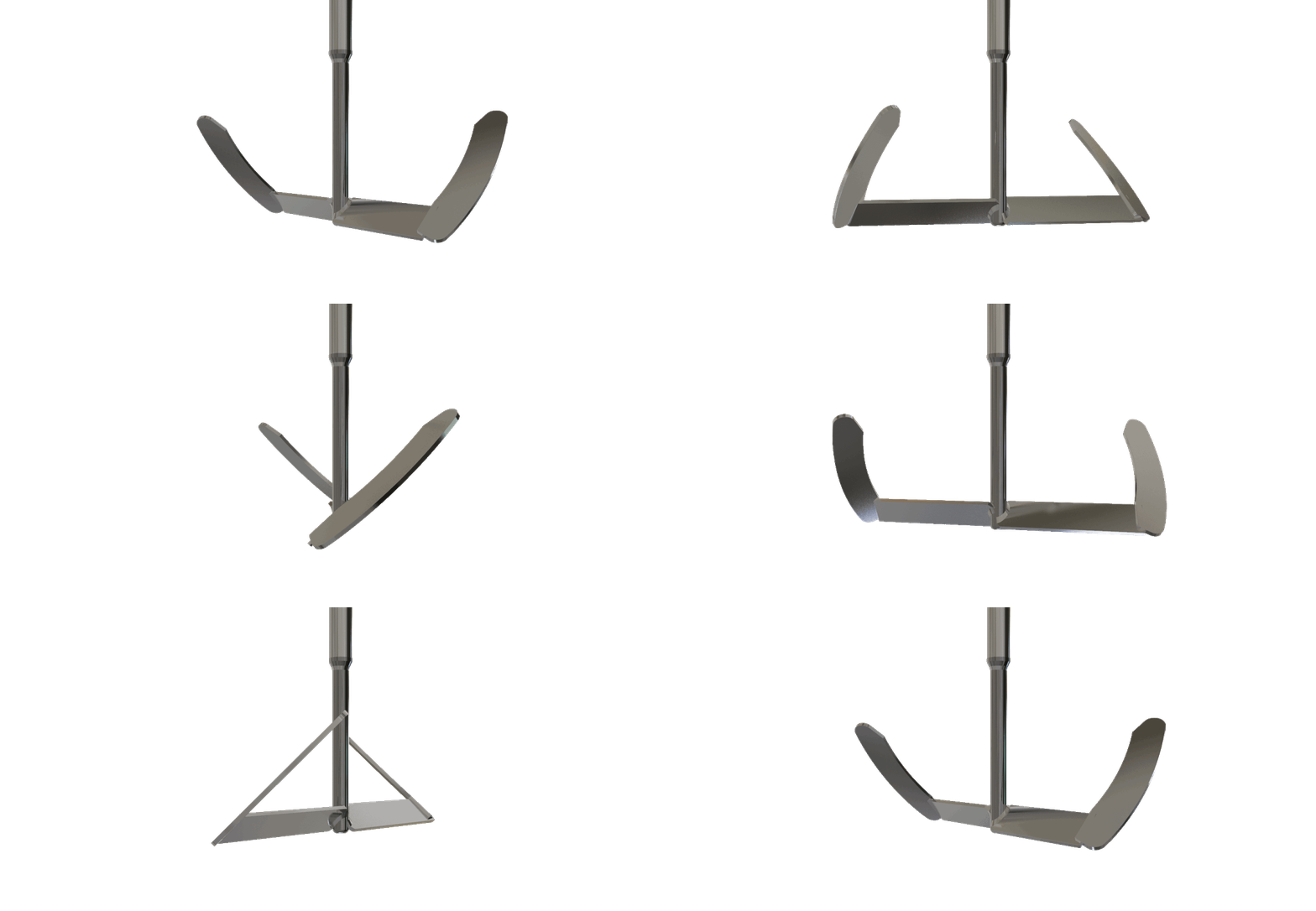
Anchor Mixing Element
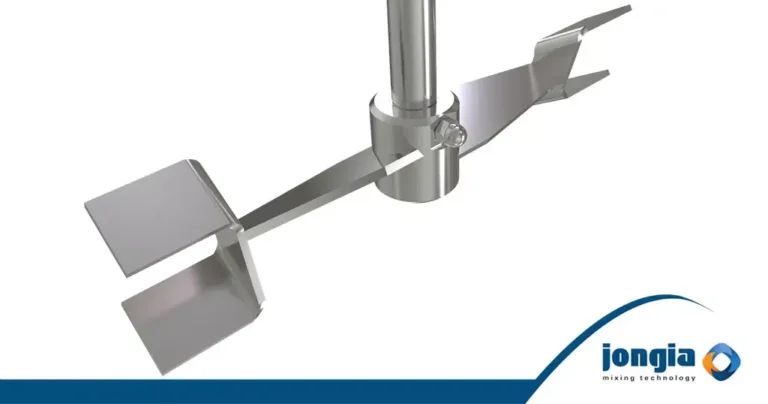
An Anchor Mixing Element is an industrial mixing blade named for its anchor-like shape. It consists of a central shaft with flat, curved blades set at 90 or 45 degrees, allowing them to scrape the vessel walls while creating a pumping effect for radial and axial mixing.
Jongia Anchor Mixing Elements are used where gentle, uniform mixing is needed rather than high shear. They are well suited for viscous or non-Newtonian fluids such as adhesives, polymers, and food emulsions. Their gentle action helps prevent agglomerates and ensures consistent mixing throughout the batch.
Benefits Anchor Mixing Element
The use of Jongia Anchor Mixing Elements in mixing and blending applications offers several benefits, including:
Effective Mixing
The Jongia Anchor Mixing Element is designed to ensure thorough mixing and blending of viscous or non-Newtonian fluids. The shape and orientation of the blades allow for gentle, yet effective mixing of the entire contents of the vessel, including those along the walls and bottom.
Reduced Mixing Time
The design of the Jongia Anchor Mixing Element allows for efficient mixing and blending, reducing the time required to achieve a uniform mixture. This leads to increased productivity and cost savings.
Consistent Product Quality
The gentle mixing action of the Jongia Anchor Mixing Element helps to prevent the formation of agglomerates and ensures uniform mixing throughout the batch. This leads to consistent product quality and reduces the need for rework.
Easy Maintenance
Jongia Anchor Mixing Elements are relatively simple in design and are easy to install and maintain. They are typically made from durable materials and are resistant to wear and corrosion.
Versatility
Jongia Anchor Mixing Elements can be used in a wide range of mixing and blending applications, including those involving viscous or non-Newtonian fluids. They can be used in batch or continuous mixing processes, and can be customized to meet specific process requirements.
Overall, the use of Jongia Anchor Mixing Elements offers several benefits that can improve the efficiency, quality, and consistency of mixing and blending processes.

Want to know more about Jongia ‘s Anchor Mixing Element or other mixing elements from Jongia Mixing Technology?
We are happy to talk to you about the most challenging mixing solutions!
Frequently Asked Questions
What is an Anchor Mixing Element?
An Anchor Mixing Element is a specialized mixing blade used in industrial applications, resembling a ship’s anchor. It’s designed to provide effective blending and mixing of various materials, ensuring uniform consistency in the mixing vessel. Its unique shape allows for gentle yet thorough mixing.
What industries use Anchor Mixing Elements?
Anchor Mixing Elements are utilized in various industries including chemical, petrochemical, food, pharmaceutical, and cosmetics. They are ideal for applications requiring gentle mixing of viscous or non-Newtonian fluids, ensuring effective blending in diverse production processes.
What are the benefits of using Anchor Mixing Elements?
Using Anchor Mixing Elements ensures effective mixing, reduces mixing time, and maintains consistent product quality. They are designed to prevent agglomerates from forming, enhancing the overall efficiency and quality of the mixing process in various applications.
How do Anchor Mixing Elements improve mixing efficiency?
The design of Anchor Mixing Elements allows for a gentle yet thorough mixing action, scraping the vessel’s walls to ensure uniformity. This results in reduced mixing times and increased productivity, contributing to cost savings and improved process efficiency.
Are Anchor Mixing Elements easy to maintain?
Yes, Anchor Mixing Elements are relatively simple to maintain, thanks to their durable design. They are made from wear-resistant materials, making installation and maintenance straightforward, which helps ensure lasting performance in mixing applications.
Contact our specialized team for all your questions

Sales Director
Tom Pruymboom

Area Sales Manager
Teun van der Spek

Project Manager
Jan Siert Tjeerdsma
Chemical Industry Articles
Difference between precipitation and crystallization
Precipitation and crystallization are both processes involved in the formation of solid substances from a solution, but they occur under
Tutorial: How does the Counterflow work?
The Counterflow is a very suitable mixing element for mixing processes of medium viscous liquid products such as paints, polymers
The Counterflow: from request to solution
Mainly in the chemical industry, the Counterflow mixing element is applied in mixing processes of products such as paint, polymers,
The Counterflow: the top entry mixer for the chemical industry
The Counterflow mixing element doesn’t only move the liquid in the middle or on the outside of the tank, but