





Biopolymers
What are biopolymers?
Biopolymers are polymers produced from natural sources. Natural polymers can be chemically synthesized from biological materials or biosynthesized by living organisms.
They consist of monomeric units bound together by covalent bonds. These monomeric units form larger molecules. Since biopolymers are derived from living organisms such as plants and microbes, they are a renewable resource that possess biodegradability.
In general, biopolymers are highly biodegradable. Because of this, they are also used in various sectors. Sectors that have an interest in the production of biopolymers include the food and biomedical industries. Biopolymers are promising materials because of their characteristics. Such as abundance in raw materials, biocompatibility and unique properties such as non-toxicity. With some nanoscale enhancements to improve their properties and practical applications, biopolymers are being explored in more and more possible ways.
Examples of biopolymers include proteins, starch, cellulose, DNA, RNA, lipids, collagen and carbohydrates.
We aim for maximum performance at lowest TCO
The market development of biopolymers
The global biopolymers market was valued at USD 13.7 billion in 2021 and is expected to reach about USD 35.25 billion by 2030. Europe is important for the majority of the revenue, at around 43.5% in 2021.
Mixing elements for biopolymer Industry
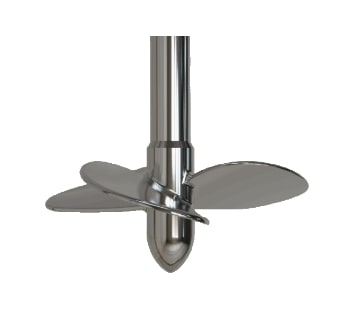
Propeller Mixer for Biopolymer Synthesis
The Propeller is used in biopolymer production to maintain a uniform distribution of monomers and catalysts. Its consistent axial flow prevents local concentration differences, ensuring high-quality polymer chains. Efficient and reliable, this mixer is suitable for a wide range of viscosities encountered during the initial stages of biopolymer synthesis.
High-Flow Hydroprop for Biopolymer Homogenization
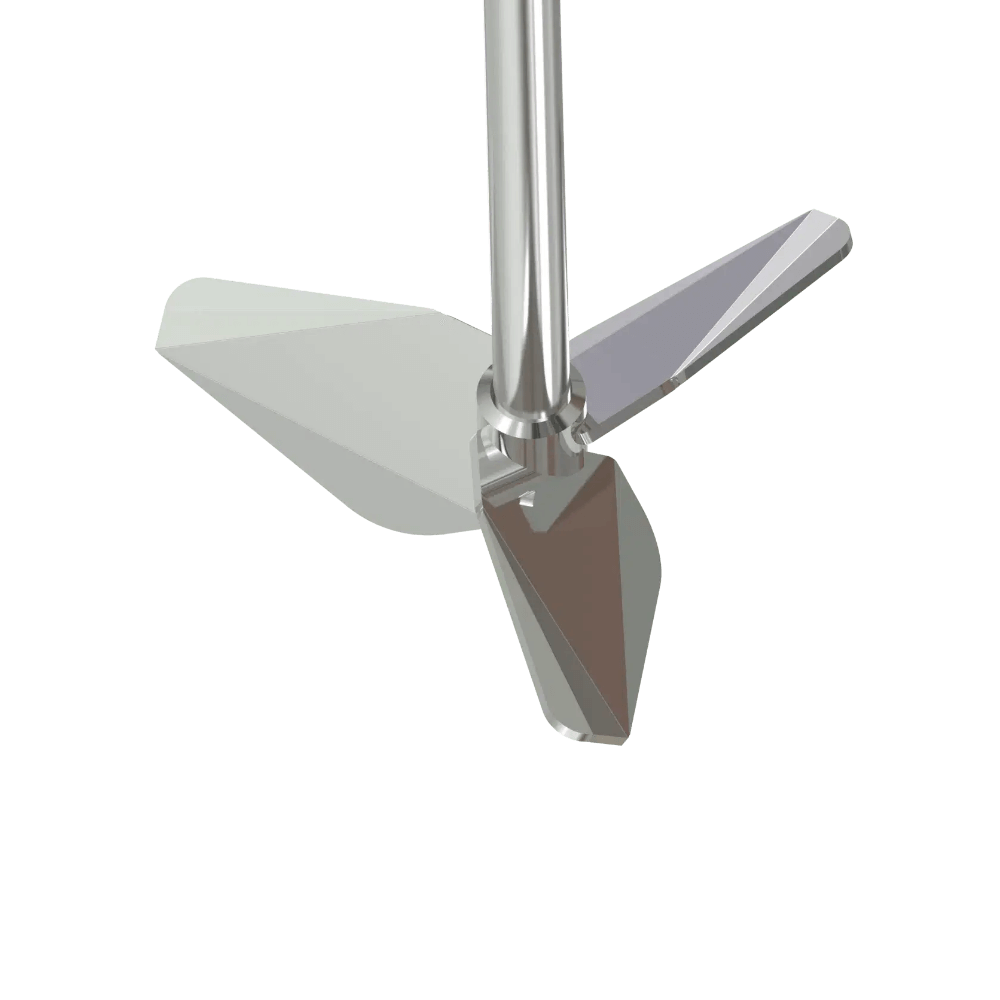
The Hydroprop is engineered for biopolymer reactors requiring large-scale turnover with low energy input. It facilitates optimal heat transfer and nutrient distribution, which are critical for controlled polymerization. Its streamlined design ensures that the growing polymer chains are mixed effectively without excessive energy loss, supporting sustainable production.
Hydrofoil Mixer for Large Biopolymer Reactors
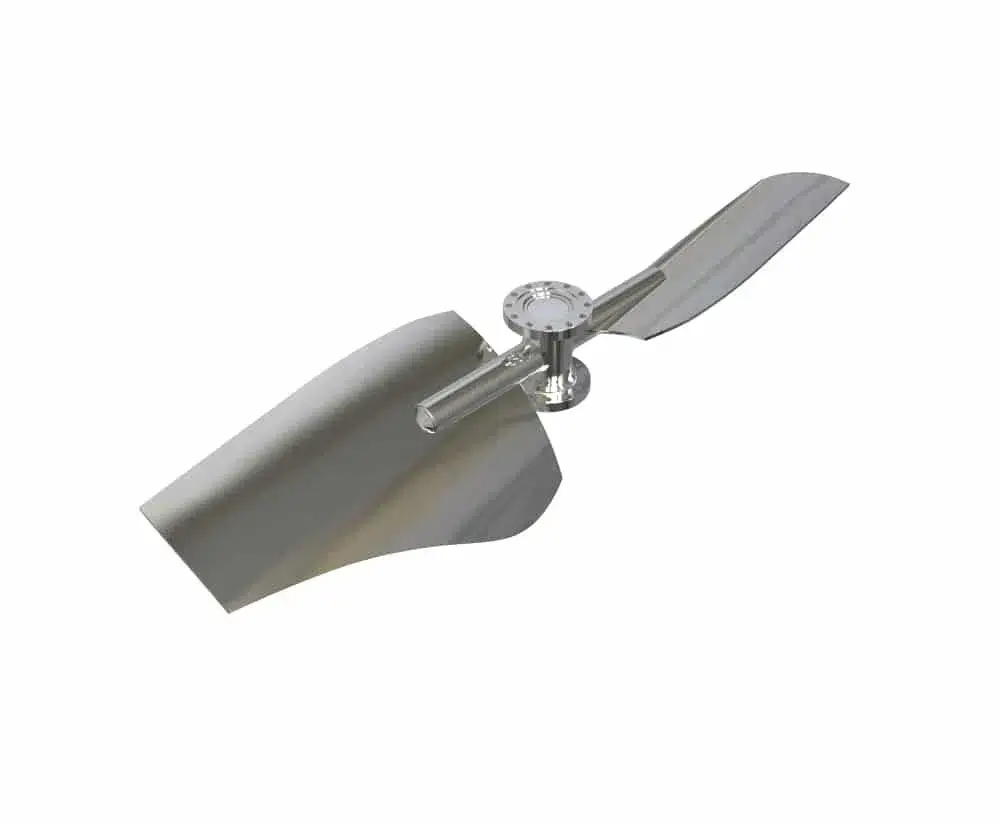
A powerhouse for biopolymer homogenization, the Hydrofoil creates high-volume axial flow. It prevents thermal stratification in large reactors and ensures a steady polymerization process by maintaining constant turnover. Its sophisticated profile converts power into fluid motion with minimal turbulence, ensuring even distribution of all chemical components.
Reinforced Hydrofoil Pin for Biopolymer Processing
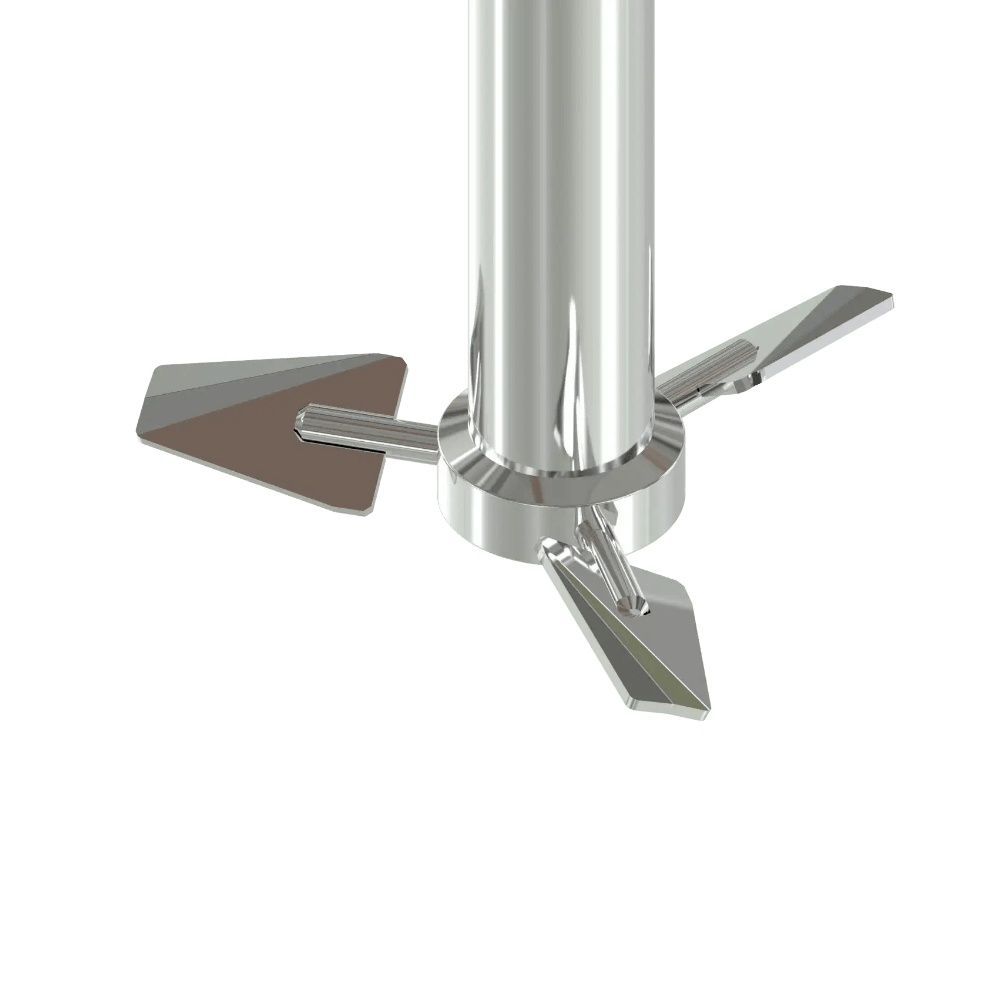
Specifically designed for high-viscosity biopolymer environments, the Hydrofoil Pin provides additional structural integrity. It ensures reliable mixing as the viscosity of the polymer increases, preventing mechanical failure. This element is essential for processes involving heavy substrates where consistent performance under increasing mechanical loads is required.
Universal Axial Flow Turbine for Biopolymers
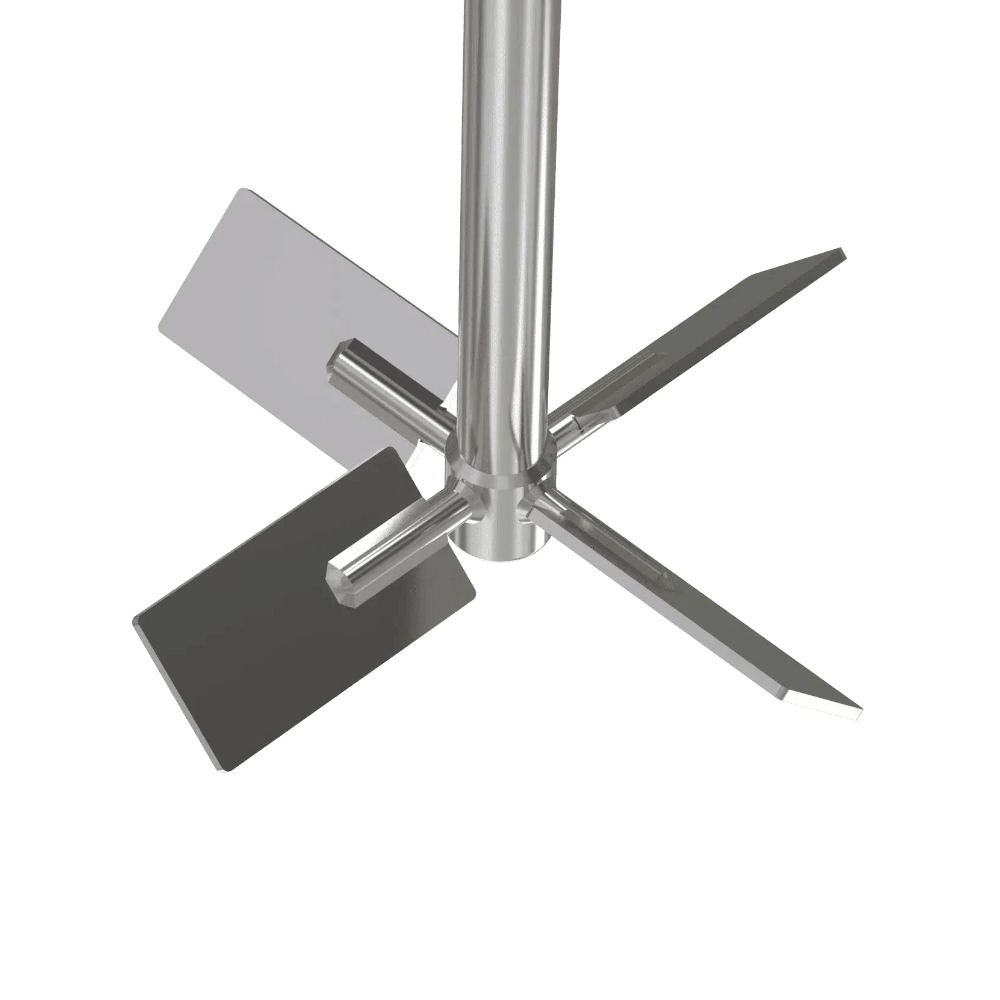
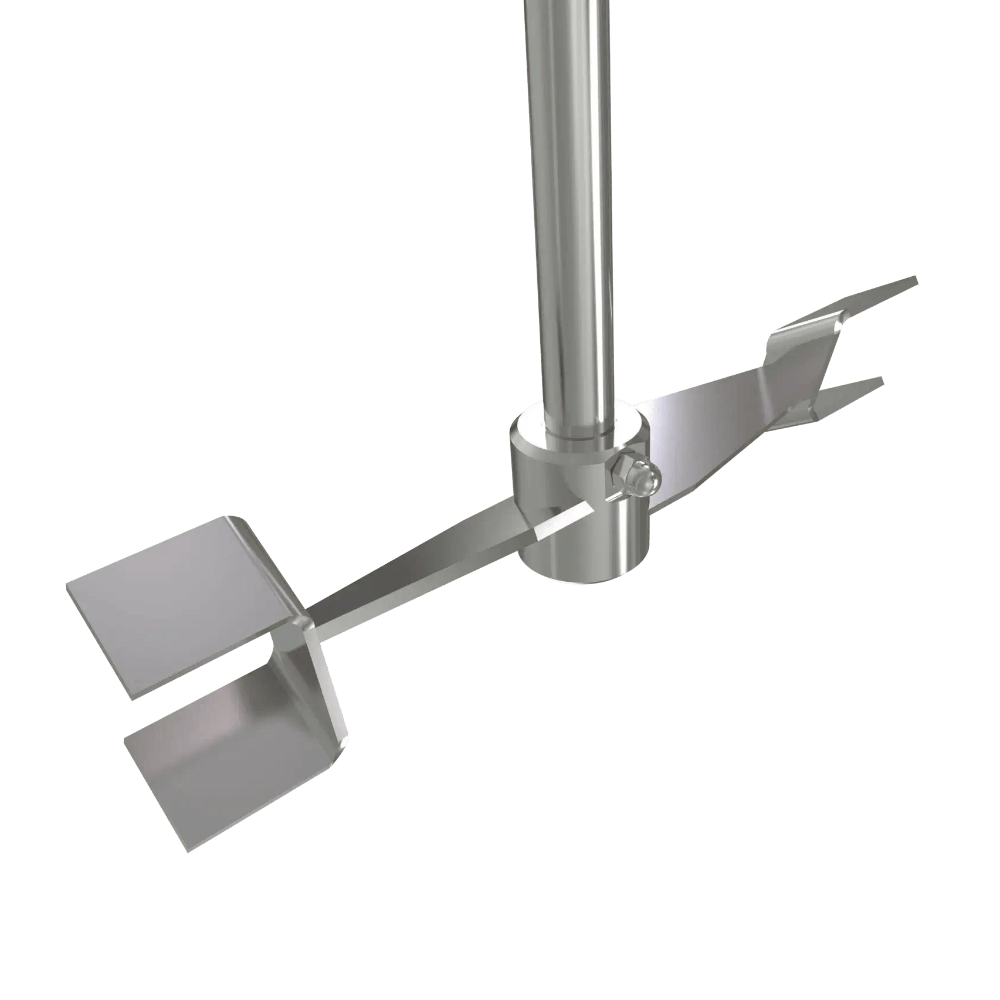
This versatile mixer ensures uniform conditions throughout the biopolymer reactor. By generating a strong axial flow, it prevents the formation of dead zones and ensures even heat distribution. Its reliable design makes it suitable for various biopolymer applications, from monomer blending to final stage homogenization.
Heavy-Duty Welded Turbine for Biopolymer Plants
Built for maximum durability, this welded turbine resists material buildup and offers long-term reliability in biopolymer reactors. By eliminating bolted connections, it simplifies maintenance and provides high mechanical integrity. It is the preferred choice for industrial-scale polymer projects requiring continuous operation and minimal maintenance intervention.
Pin-Reinforced Turbine for Biopolymer Production
Adapted for biopolymer processes involving high solids or viscous material, this turbine features reinforced pins for superior strength. It prevents phase separation and maintains a clean mixing environment by ensuring constant, powerful agitation. This element is vital for achieving high-quality polymers with consistent molecular weight distribution.
Counterflow Turbine for Complex Biopolymer Mixing
Specifically designed for high-viscosity biopolymer processes, the Counterflow Turbine creates complex flow patterns for superior homogenization. It prevents the formation of dead zones in the reactor, ensuring that all components are mixed thoroughly. This element is essential for achieving consistent molecular weight distribution in advanced biopolymer products.
Types of biopolymer
Biopolymers can be classified according to different scales. These classifications are based on their origin, a number of monomeric units, on degradability, their heat resistance, etc. Some of the classifications are:
- Sugar-based polymers.
Starch or sucrose is used as a raw material for production. Lactic acid polymers are made using lactose from potatoes, corn, etc. - Starch-based polymers
Starch is a natural polymer composed of glucose. It is found in plant tissues. - Cellulose-based biopolymers.
Used for packaging, this polymer consists of glucose obtained from natural sources such as cotton. E.g. cellophane. - Synthetic materials
Degradable polymers can be made from synthetic materials obtained from petroleum.
Applications
Frequently Asked Questions
What are biopolymers?
Biopolymers are polymers from natural sources, either synthesized or biosynthesized by living organisms. They consist of monomeric units linked by covalent bonds and are highly biodegradable, used in sectors like food and biomedical due to their renewable nature and unique properties such as non-toxicity.
What is the current market value of biopolymers?
In 2021, the global biopolymers market was valued at approximately USD 13.7 billion. It is expected to grow significantly, reaching about USD 35.25 billion by 2030, indicating a strong demand for biopolymers globally.
What are some examples of biopolymers?
Examples of biopolymers include proteins, starch, cellulose, DNA, RNA, lipids, collagen, and carbohydrates. These substances are abundant in nature and offer diverse applications across multiple industries.
How are biopolymers classified?
Biopolymers can be classified based on their origin, number of monomeric units, degradability, and heat resistance. There are different categories such as sugar-based, starch-based, cellulose-based biopolymers, and synthetic materials.
What industries are interested in biopolymers?
Industries such as food, biomedical, and packaging have a keen interest in biopolymers. Their biodegradability and non-toxic nature make them suitable for applications that prioritize sustainability and environmental impact.
Bio-Based Industry Contacts
Tom Pruymboom
Sales Director
Jan Siert Tjeerdsma
Project manager
Technical Specialist
Bio-based & Environmental – Related Articles

Artificial Intelligence and Machine Learning are Moving Up into Mixing Technology
In the ever-evolving landscape of industrial technology, artificial intelligence (AI) and machine learning (ML) are making significant strides in various sectors, including mixing technology. Jongia Mixing Technology is at the forefront of this revolution, integrating state-of-the-art sensor technology with advanced
Jongia Mixing Technology‘s Biogas Production program
Optimizing Biogas Production with Jongia’s Innovative Technology Jongia is leading the way in improving biogas production with its advanced mixing solutions. In the biogas industry, effective mixing is key to maximizing energy output, minimizing power consumption and optimizing system efficiency.
VVTI Biogas Tilburg
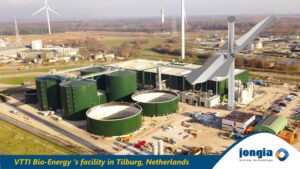
VTTI Biogas Tilburg is developing a new bio-energy facility, focusing on processing organic waste. The plant is expected to produce approximately 23 million cubic metres of biogas annually. A portion of this will be converted into green gas for the