







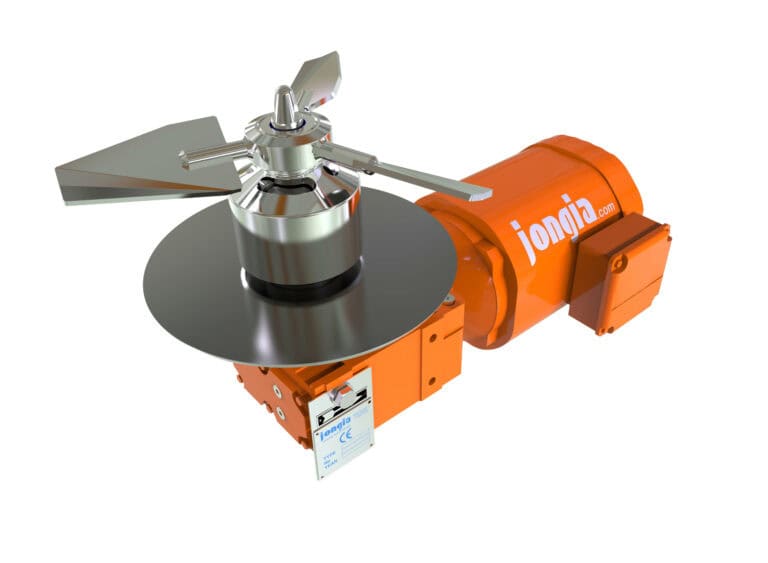
Mixing from the bottom up: Jongia’s Magnetic Bottom Mixer type JMB
Tight space around the tank, a low liquid level and no room for leakage? Jongia’s Magnetic Bottom Mixer type JMB is built for exactly that position.
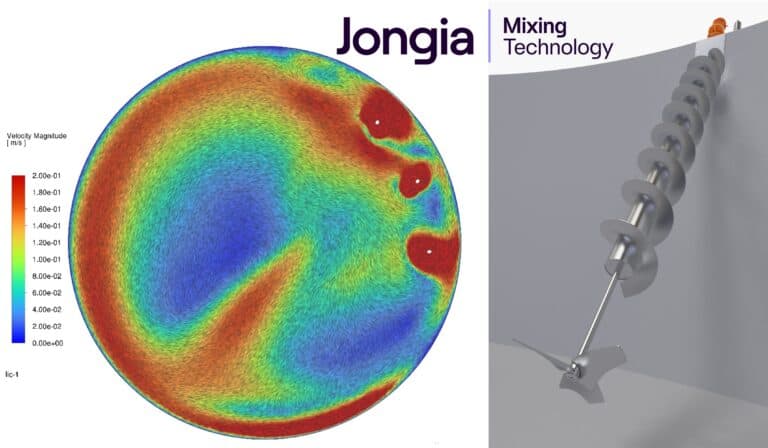
The Jongia Multiprop mixer: breaking floating layers in biogas tanks
Fibrous material builds up into a floating layer that traps biogas and slows liquid flow. The Jongia Multiprop mixer combines propulsion and crust-breaking in one unit to break it up, flush it away and keep the tank homogeneous.
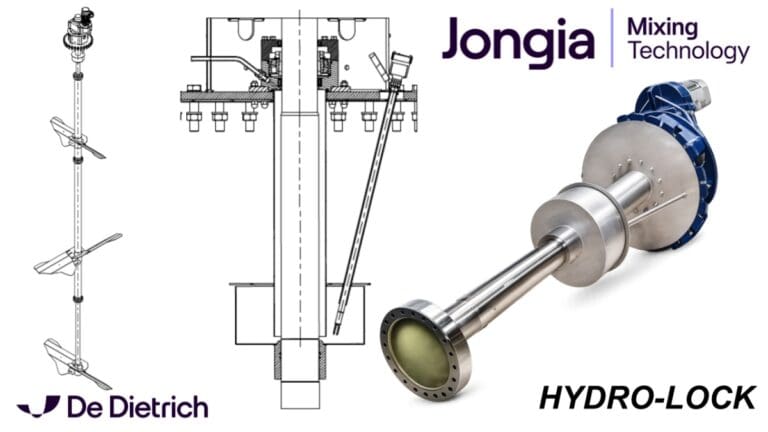
Next-level shaft sealing with water: Jongia introduces the upgraded Hydro-Lock
Biogas escaping from your digester means lost energy and a potential safety risk. That is why Jongia has developed a new generation of its proven Hydro-Lock sealing system: designed for even greater reliability, with zero routine maintenance. “With the Jongia
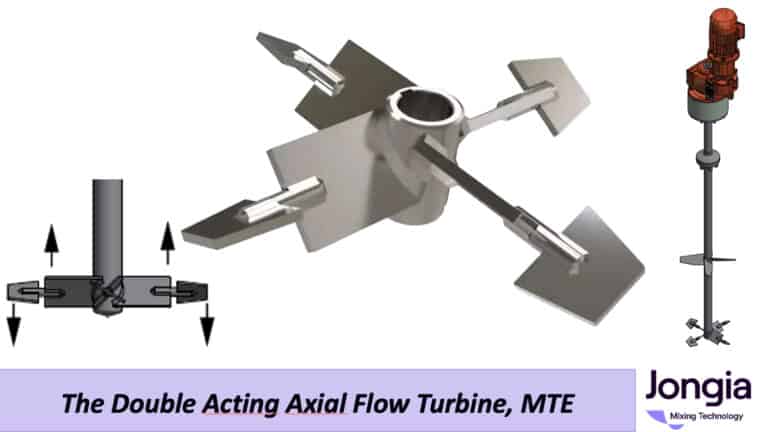
The Double Acting Axial Flow Turbine type AST-MTE mixing element
Operation of an AST-MTE Element Operation of an AST-MTE Element This element can be used in both CW (clockwise) and CCW (counterclockwise) directions. In one case, the inner AST element is downward-pumping with the outer tips pumping upward, and in