



Paper & Pulp
Paper is a thin sheet material produced by cellulose fibers derived from wood, rags, grasses or other plant sources. This base of paper can be processed mechanically or chemically in water. To produce paper, the processed plant sources pass through fine mesh via water, then all the fibers are distributed over the surface. When this is all done the pulp is pressed and dried giving you fine paper.
Production process of paper
Although paper was originally made by hand in single sheets, almost all of it is now made on large machines. In which some machines have developed to the point where they can produce rolls of paper 10 meters wide at a rate of 2,000 meters per minute. This comes out to a total production of 600,00 tons per year.
Paper is a versatile material with many uses, including printing, painting, graphics, signage, design, packaging, decoration, writing and cleaning. It can also be used as filter paper, wallpaper, hoarding paper, conservation paper, laminated worktops, toilet paper, coin and security paper or in a number of industrial and construction processes.
Mixing elements for Paper & Pulp
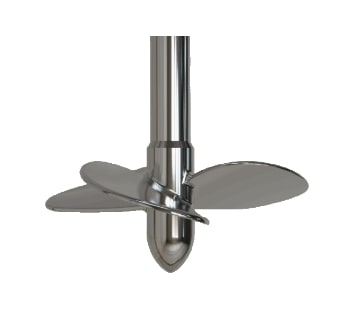
Versatile Propeller Mixer for Paper & Pulp
The Propeller is a workhorse in paper and pulp processing, keeping cellulose fibers and bleaching agents in uniform suspension inside pulp chests and stock tanks. Its axial flow prevents settling and ensures consistent distribution of every component throughout the batch. Energy-efficient and reliable, it adapts to the viscosity changes typical of paper & pulp without loss of performance.
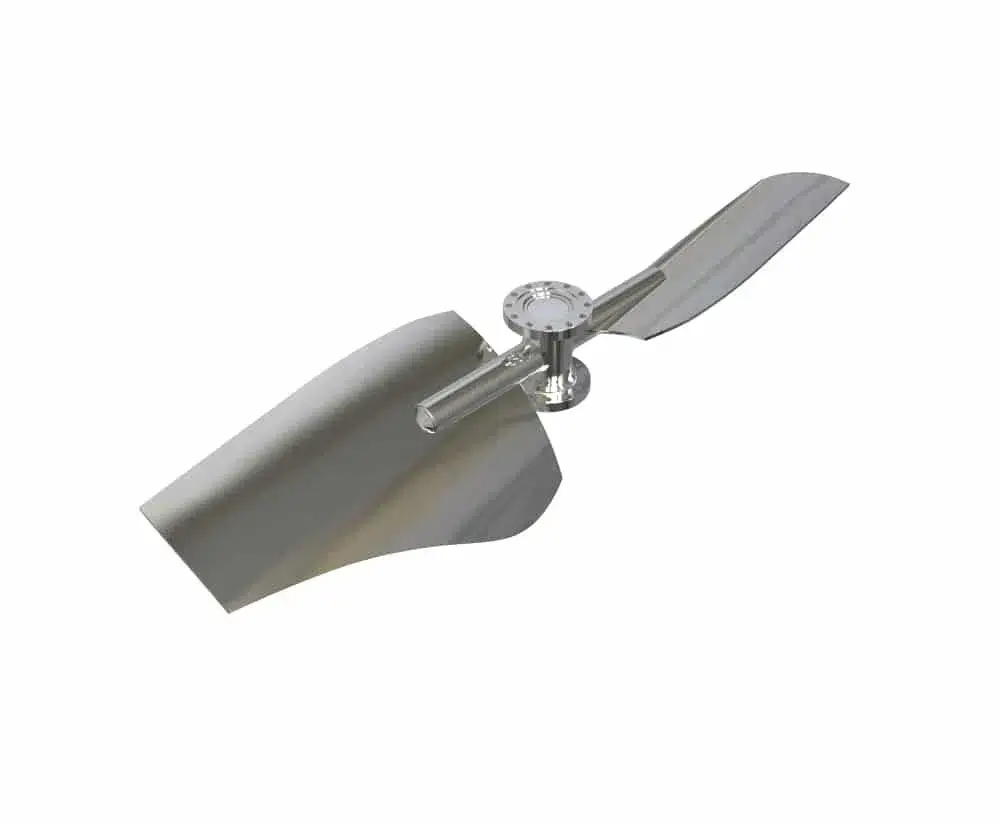
High-Capacity Hydroprop for Paper & Pulp
The Hydroprop delivers outstanding pumping capacity with minimal energy input, making it ideal for large pulp chests and stock tanks in paper and pulp processing. It ensures complete tank turnover, eliminates temperature gradients, and keeps cellulose fibers and bleaching agents in a stable, homogeneous state. Its streamlined design cuts operating costs while supporting continuous, high-volume paper & pulp.
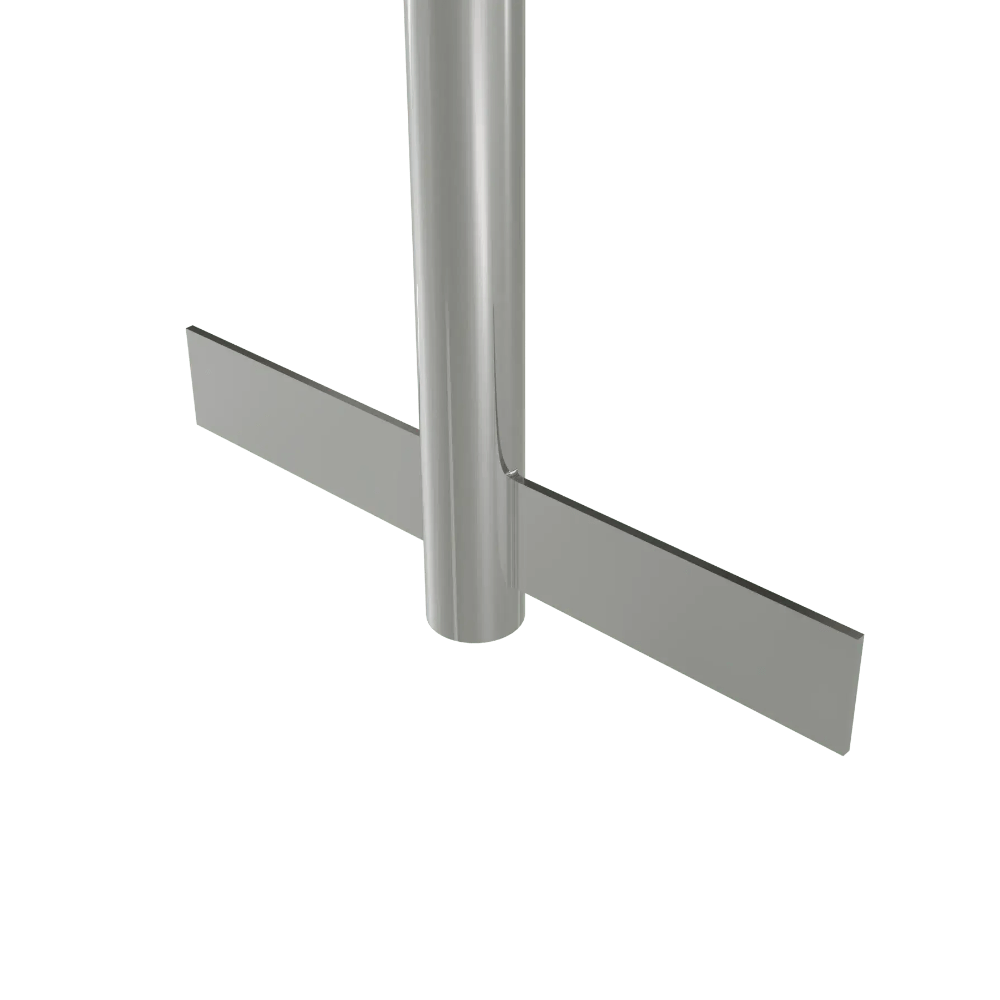
Robust Flatblade Turbine for Paper & Pulp
The Flatblade turbine generates strong radial flow and turbulence, tackling fiber flocculation and fiber wrap head-on in paper and pulp processing. It breaks up agglomerates, disperses additives, and homogenizes cellulose fibers and bleaching agents even when viscosity fluctuates. Its rugged construction handles the mechanical demands of industrial paper & pulp with proven reliability.
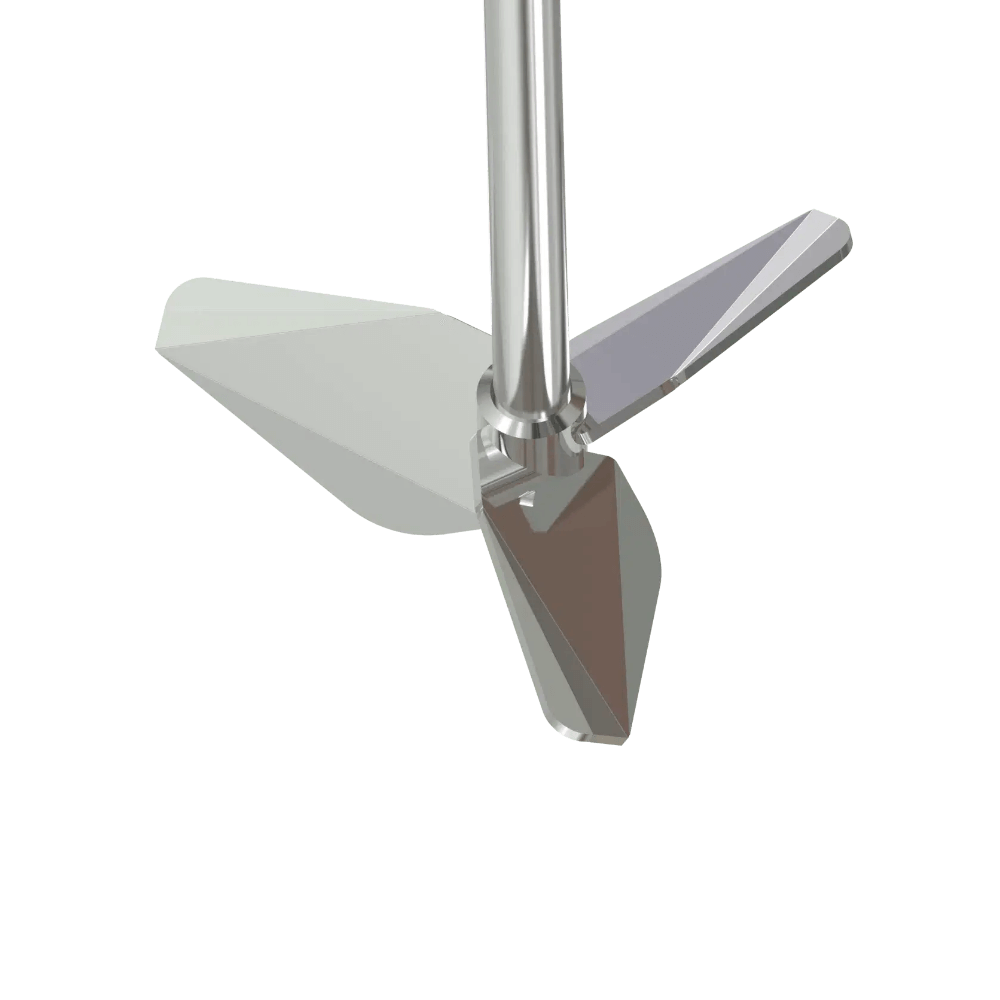
High-Flow Hydrofoil for Paper & Pulp
The Hydrofoil generates high-volume axial flow, making it a powerful solution for large pulp chests and stock tanks in paper and pulp processing. It prevents thermal stratification and keeps cellulose fibers and bleaching agents in steady motion with minimal turbulence. The optimized blade profile turns drive power into fluid motion efficiently, supporting consistent homogenization at industrial scale.
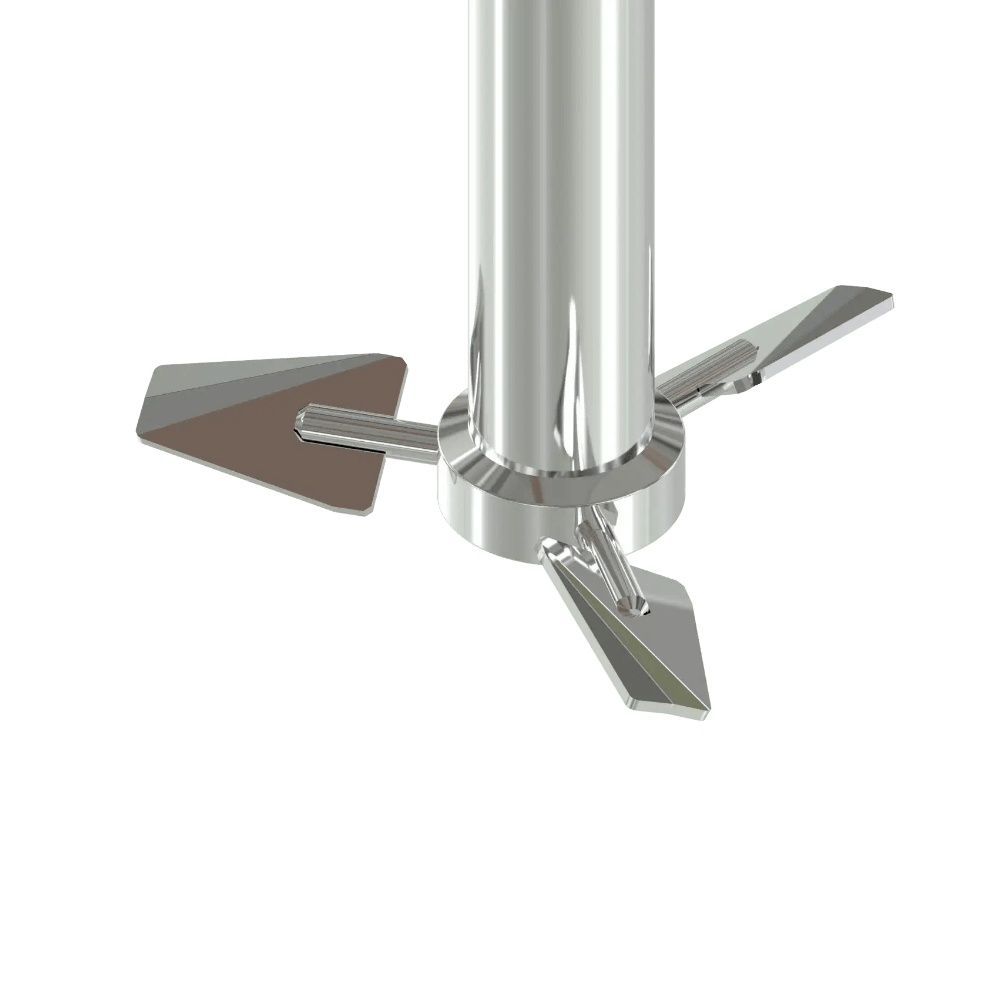
Reinforced Hydrofoil Pin for Demanding Paper & Pulp
The Hydrofoil Pin combines proven hydrofoil performance with reinforced pins for tougher substrates encountered in paper and pulp processing. Its structural design handles high-viscosity and high-solids zones where standard impellers might struggle, particularly when fiber flocculation and fiber wrap becomes critical. It delivers reliable mixing where cellulose fibers and bleaching agents are demanding to handle.
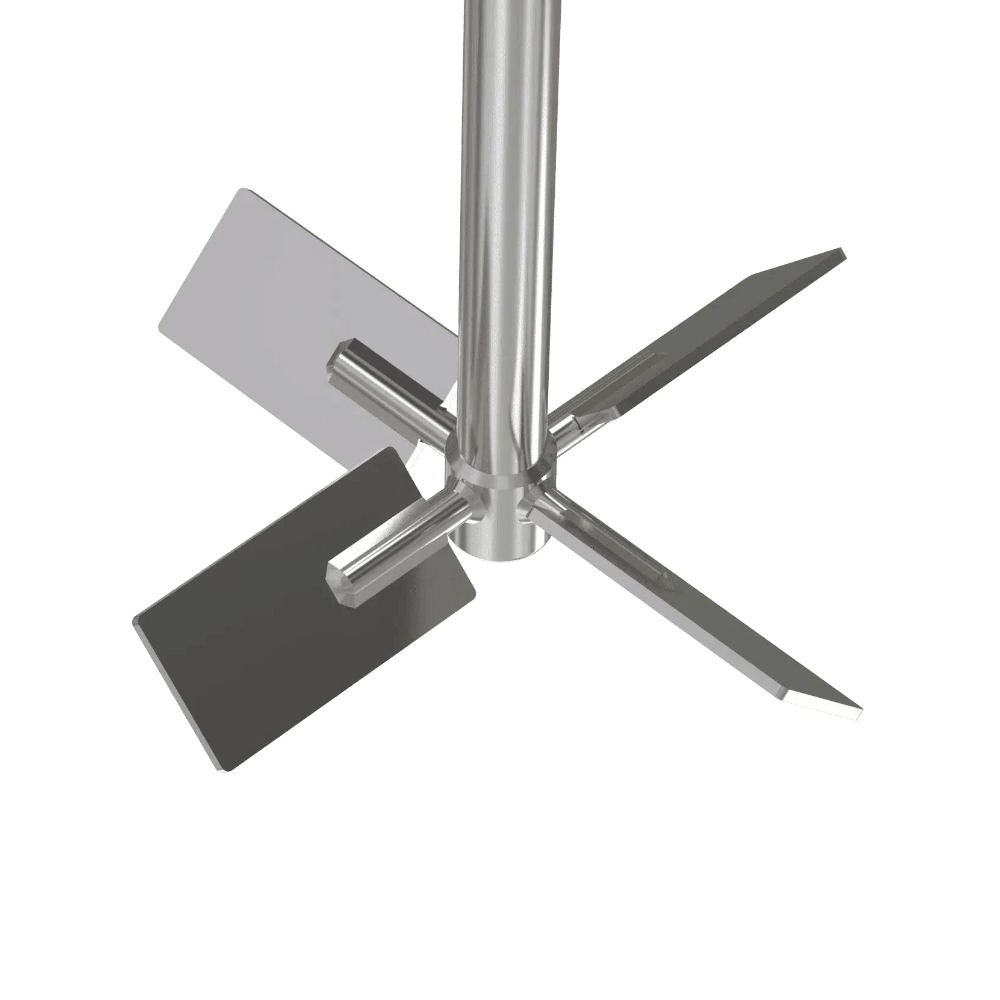
Reliable Axial Flow Turbine for Paper & Pulp
The Axial Flow Turbine is a dependable all-rounder for paper and pulp processing, ensuring even distribution of heat and additives throughout pulp chests and stock tanks. It prevents stagnant zones and keeps cellulose fibers and bleaching agents in consistent motion across the vessel. Its cost-effective, robust design makes it a go-to choice for stable, continuous operation in paper & pulp.
Heavy-Duty Welded Turbine for Paper & Pulp
Built for maximum durability in continuous paper and pulp processing, this welded turbine eliminates bolted connections for superior mechanical integrity. Its smooth profile resists buildup of cellulose fibers and bleaching agents and simplifies cleaning and maintenance in pulp chests and stock tanks. It is the preferred choice for industrial-scale paper & pulp that demand long service intervals and high reliability.
Axial Flow Turbine Pin for Challenging Paper & Pulp
Adapted for paper and pulp processing involving fibrous materials or high solids content, this turbine uses reinforced pins to cut through fiber flocculation and fiber wrap. It maintains an effective mixing zone even when the composition of cellulose fibers and bleaching agents varies from batch to batch. An essential element for facilities handling inconsistent or demanding substrates in paper & pulp.
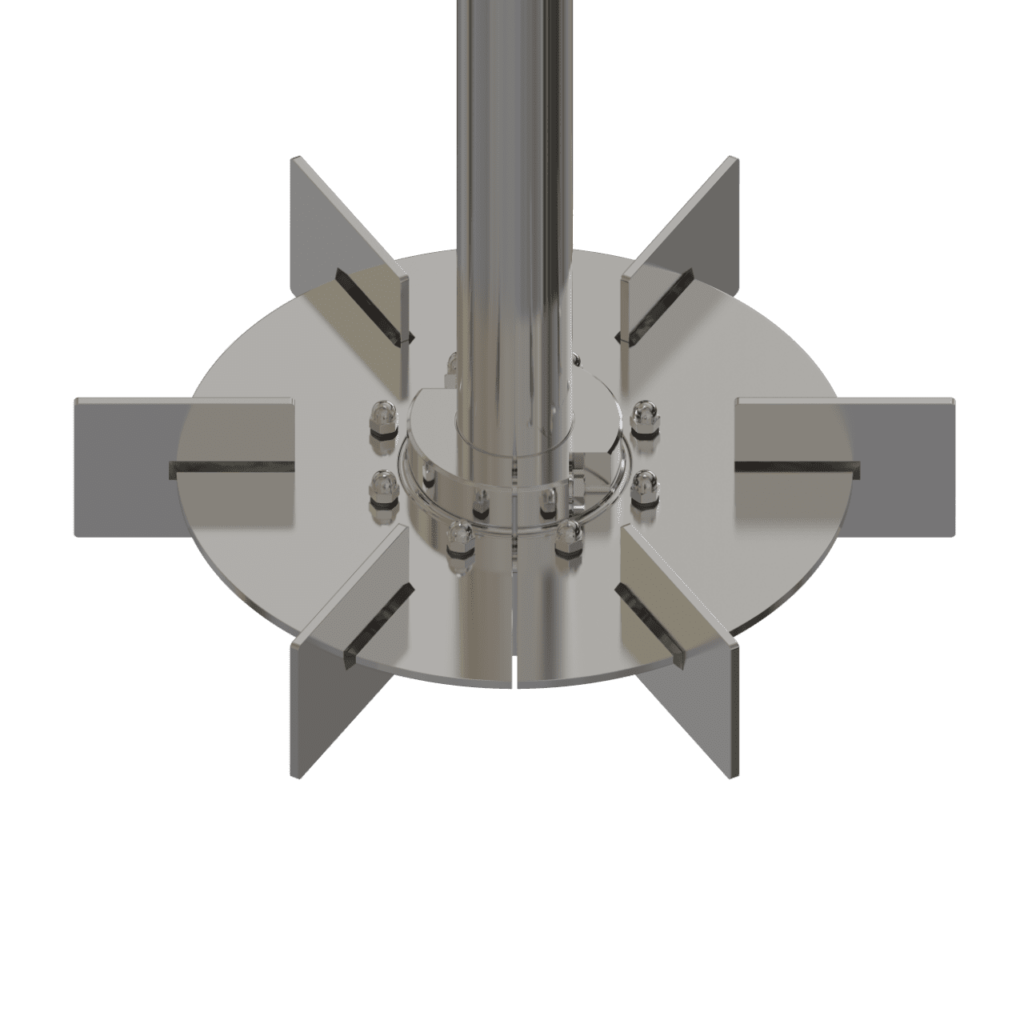
Rushton Turbine for Intensive Paper & Pulp Dispersion
The Rushton Turbine is the industry standard for high-shear gas-liquid work in paper and pulp processing. It excels at dispersing gases, catalysts, and additives into cellulose fibers and bleaching agents inside pulp chests and stock tanks, maximizing mass transfer at every stage. The preferred choice when intensive reaction conditions and high power input are needed.
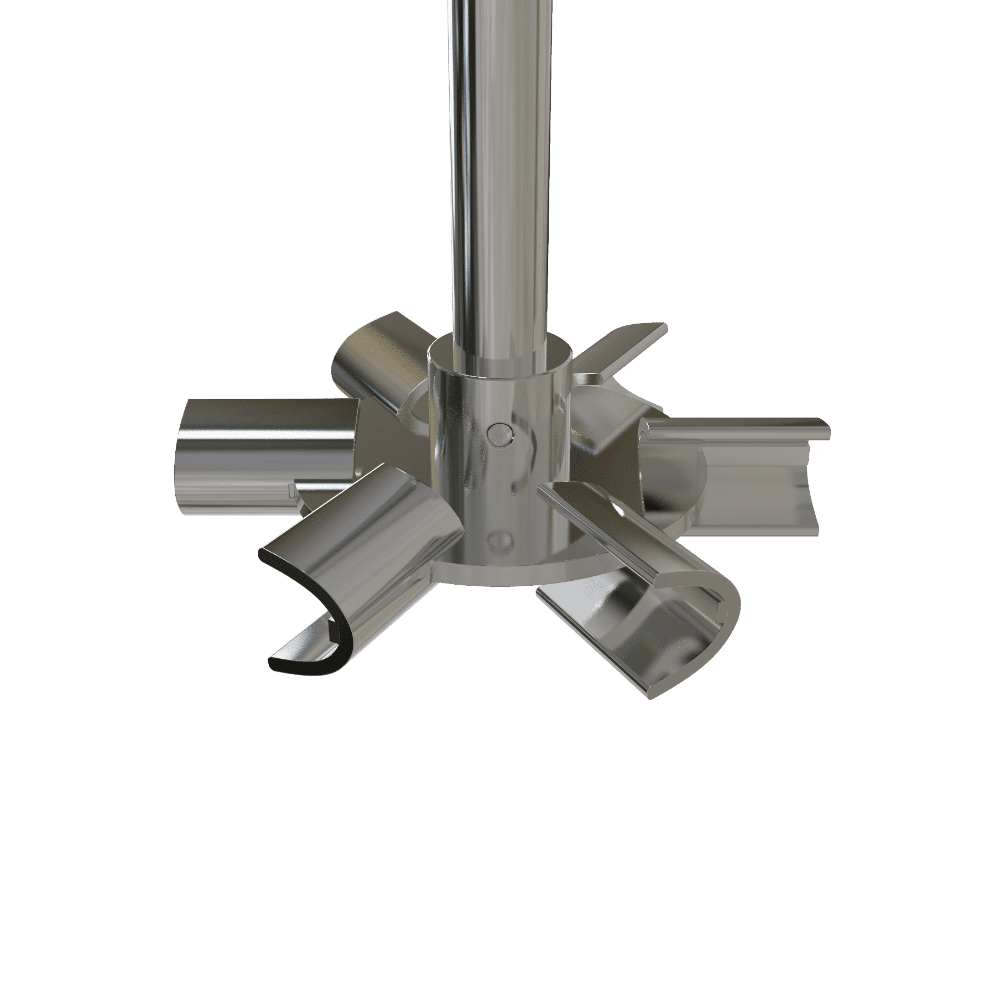
Concave Turbine for Efficient Paper & Pulp Gas Mixing
The Concave Turbine is an advanced evolution of the Rushton design, delivering improved gas handling in paper and pulp processing. Its concave blades prevent gas flooding in pulp chests and stock tanks and ensure stable power draw, even at high gas rates with cellulose fibers and bleaching agents. Ideal where reliable gas-liquid interaction is critical to process outcome.
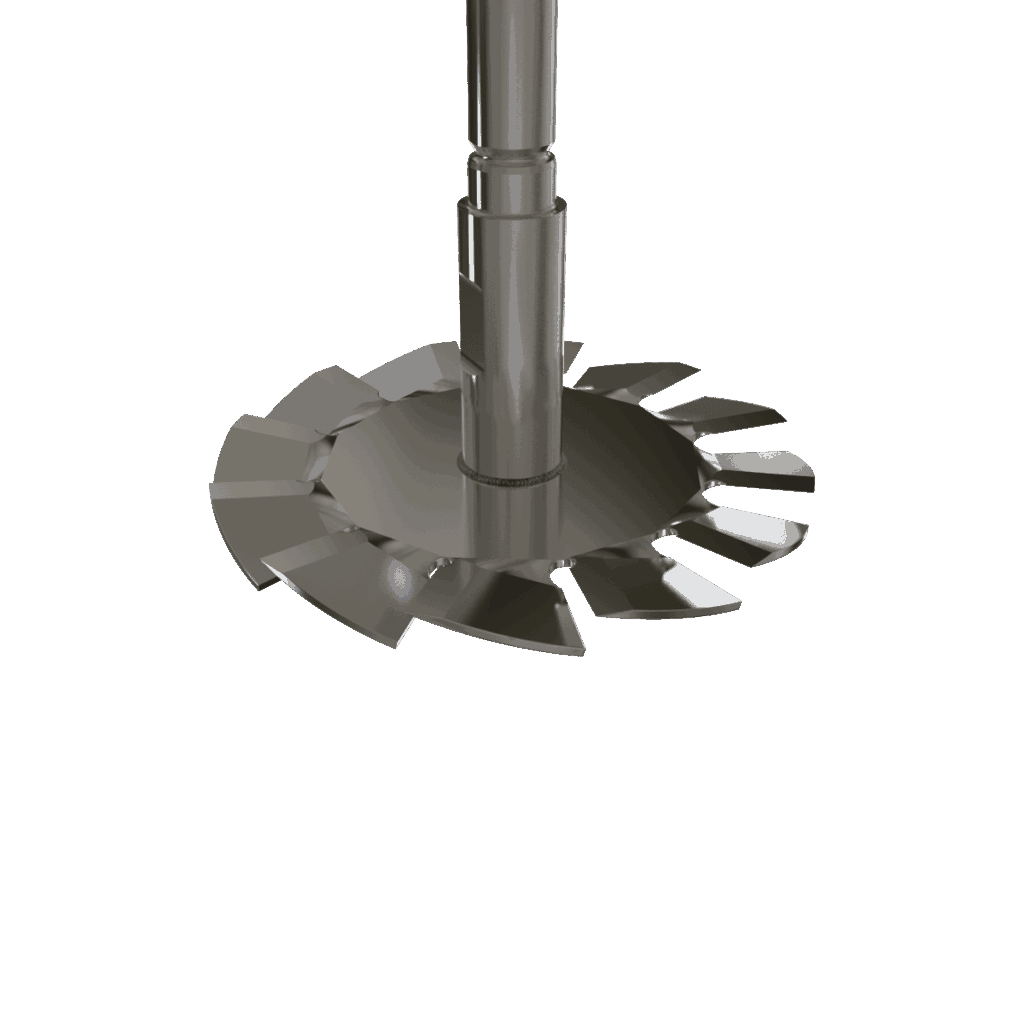
Dispersion Turbine for Paper & Pulp Emulsions
The Dispersion Turbine provides the high-shear mixing required to create stable dispersions and emulsions in paper and pulp processing. It breaks down agglomerates and ensures fine particle distribution of cellulose fibers and bleaching agents throughout pulp chests and stock tanks. A key element in producing paper & pulp with consistent texture and reliable end-use performance.
Paper market developments
The global pulp and paper market was valued at $351.5 billion in 2021 and is expected to reach approximately $380.12 billion by 2030.
The pulp and paper sector is the largest and most important forestry sector in the world. The environmental impact of paper production is enormous. For example, the manufacture of paper requires an enormous amount of water; as a result, paper production also consumes much more water than other industries such as steel and gasoline.
The manufacture of paper pulp provide considerable economic growth in developing countries such as India, China and Brazil, this is because the demand for the pulp industry continues to grow and it also provides a lot of jobs. Unfortunately, the production and use of unsustainable paper is still too low, making the paper industry very harmful to natural ecosystems and contributing to the deforestation of the tropical rainforest, among others.
Consumers and manufacturers are increasingly using paper for recycling. Thus, paper manufacturers are looking at ways to produce their packaging as sustainably as possible and that is also equally suitable for its reuse. Despite its large impact on the ecosystem, paper is the most recyclable and environmentally friendly packaging material, offering great potential for a more sustainable future.
Frequently Asked Questions
What is paper made from?
Paper is made from cellulose fibers derived from wood, rags, grasses, or other plant sources. The material is processed mechanically or chemically in water before being pressed and dried to create fine paper.
How is paper produced?
Paper production involves passing processed plant sources through fine mesh via water, distributing fibers over the surface. This pulp is then pressed and dried to form sheets of paper.
What are the main uses of paper?
Paper is a versatile material used for printing, packaging, cleaning, writing, and many other applications. It serves as filter paper, wallpaper, and laminated surfaces, among other purposes.
What is the size of the global paper market?
The global pulp and paper market was valued at $351.5 billion in 2021 and is projected to reach approximately $380.12 billion by 2030, indicating steady growth in demand.
How does paper production impact the environment?
Paper production has significant environmental impacts, notably high water consumption and deforestation. Efforts are increasing to promote sustainable practices and recycling to mitigate these effects and enhance eco-friendliness.
Chemical Industry Contacts

Sales Director
Tom Pruymboom

Area Sales Manager
Teun van der Spek

Project Manager
Jan Siert Tjeerdsma
Chemical - Related Articles
Difference between precipitation and crystallization
Precipitation and crystallization are both processes involved in the formation of solid substances from a solution, but they occur under

Tutorial: How does the Counterflow work?
The Counterflow is a very suitable mixing element for mixing processes of medium viscous liquid products such as paints, polymers
The Counterflow: from request to solution
Mainly in the chemical industry, the Counterflow mixing element is applied in mixing processes of products such as paint, polymers,

The Counterflow: the top entry mixer for the chemical industry
The Counterflow mixing element doesn’t only move the liquid in the middle or on the outside of the tank, but