


Lactose
Lactose is also known as “milk sugar.” This is because it occurs naturally only in the milk of mammals such as cows, goats and humans. Milk from cows and goats is used to make cheese and yogurt. Not all milk products contain the same amount of lactose. For example, hard cheeses such as cheddar, parmesan and Swiss cheese contain little or no lactose. While milk, ice cream and yogurt contain larger amounts of lactose. Hard cheeses contain less lactose because of the removal of whey (a liquid solution of fat, lactose and protein) during preparation and because of the continuous breakdown of lactose by bacteria during the aging process.
Is lactose a natural or added sugar?
The sugar we consume is often described as natural sugar or added sugar. Like many other types of sugars, lactose can be considered both a natural sugar and an added sugar, depending on its source. Lactose is inherent in the milk of mammals and can also be isolated from this original source and crystallized for use as ingredients. Products containing these ingredients include: caramels, frozen desserts, fudge, meat products, sauces and soups. The lactose in plain milk and plain milk products is considered a natural sugar. The lactose added as an ingredient to packaged foods and beverages during manufacturing are considered an added sugar.
How is lactose digested?
The digestion of lactose takes place in the small intestine using the enzyme lactase. Lactase breaks down lactose into the monosaccharides galactose and glucose, making them available for absorption. Glucose is eventually absorbed by our cells with the help of insulin. Galactose is transported to the liver, where it is converted to glucose for use in energy production.
Because of the essential nutrition provided by lactose in breast milk to infants, we are born with the ability to produce lactase. Only in rare cases are infants born with a lactase deficiency, a condition called congenital alactasia. Infancy is the stage of life when lactase production is highest. After weaning, lactase production slows rapidly and dramatically and usually decreases with age. This decrease in lactase production can result in the inability to digest lactose later in life. Research has shown that about two-thirds of the world’s population does not produce enough lactase to adequately digest lactose.
Mixing elements for Lactose Production
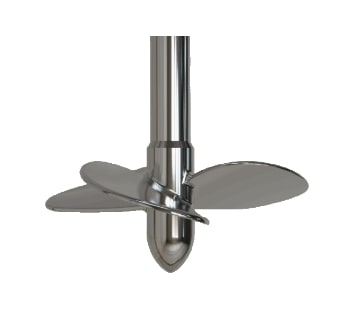
Versatile Propeller Mixer for Lactose Production
The Propeller is a workhorse in lactose production, keeping whey permeate and mother liquor in uniform suspension inside crystallizers. Its axial flow prevents settling and ensures consistent distribution of every component throughout the batch. Energy-efficient and reliable, it adapts to the viscosity changes typical of lactose production without loss of performance.
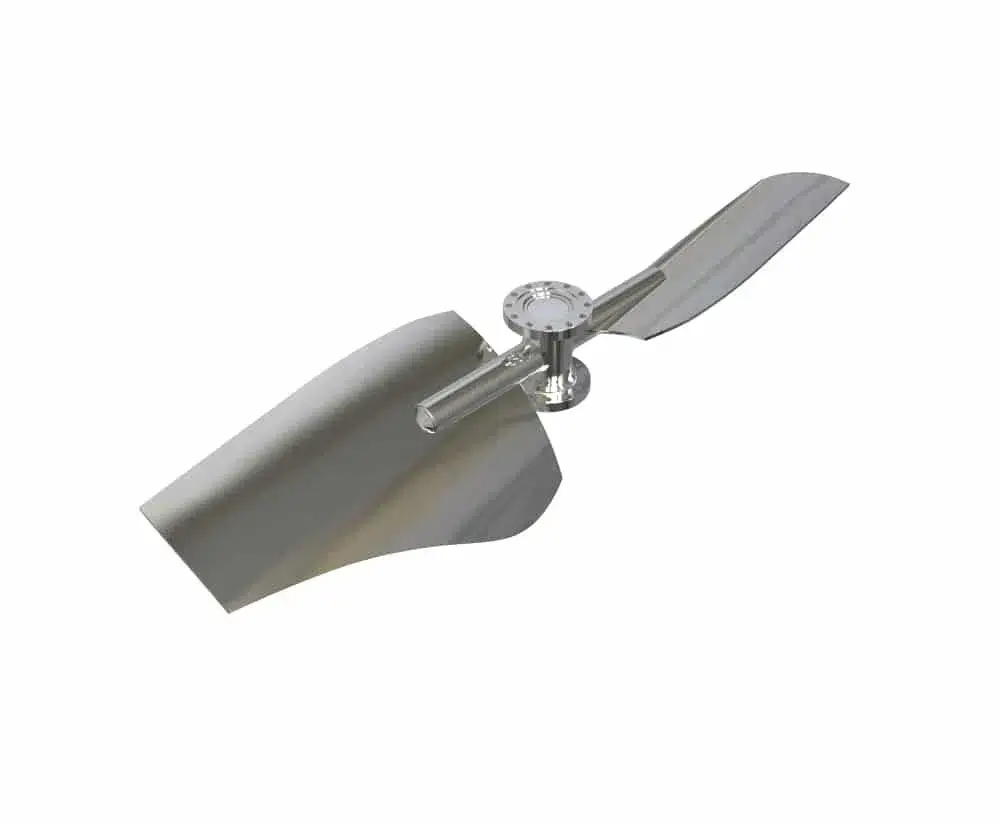
High-Capacity Hydroprop for Lactose Production
The Hydroprop delivers outstanding pumping capacity with minimal energy input, making it ideal for large crystallizers in lactose production. It ensures complete tank turnover, eliminates temperature gradients, and keeps whey permeate and mother liquor in a stable, homogeneous state. Its streamlined design cuts operating costs while supporting continuous, high-volume lactose production.
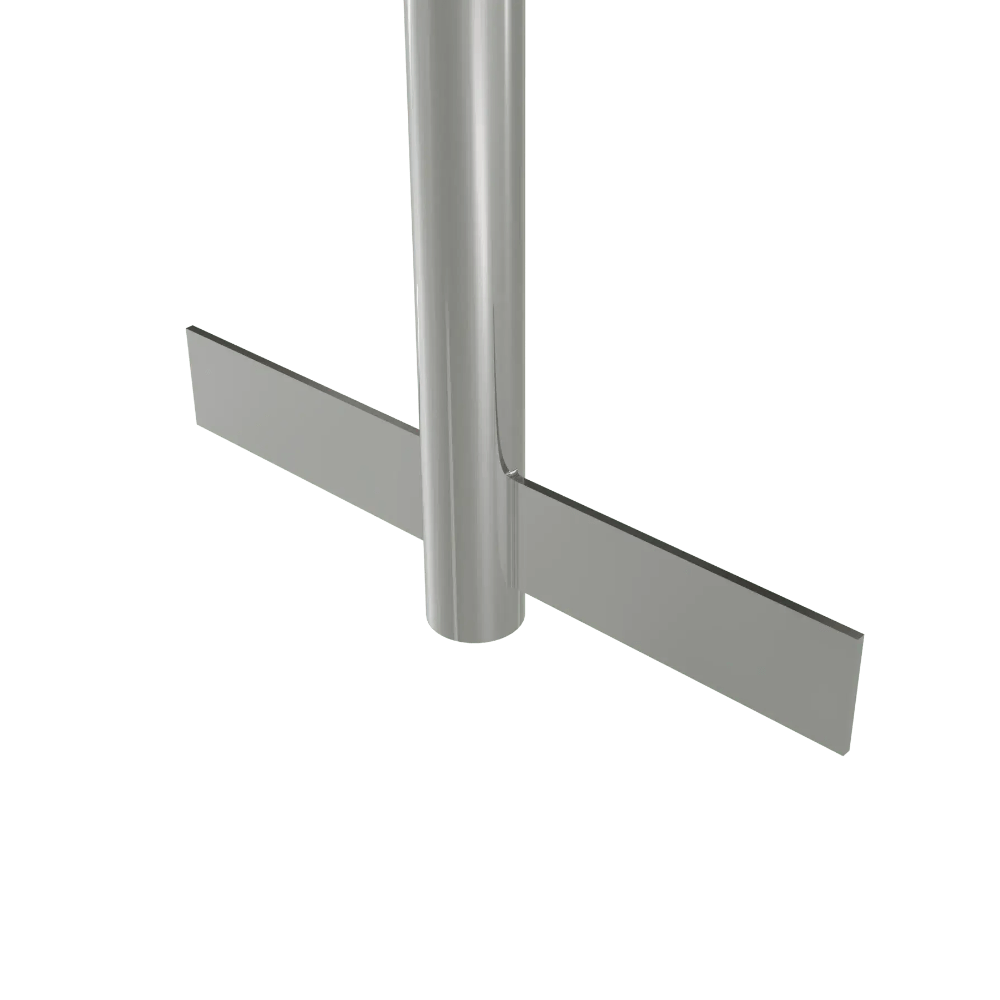
Robust Flatblade Turbine for Lactose Production
The Flatblade turbine generates strong radial flow and turbulence, tackling controlled crystal growth without shear damage head-on in lactose production. It breaks up agglomerates, disperses additives, and homogenizes whey permeate and mother liquor even when viscosity fluctuates. Its rugged construction handles the mechanical demands of industrial lactose production with proven reliability.
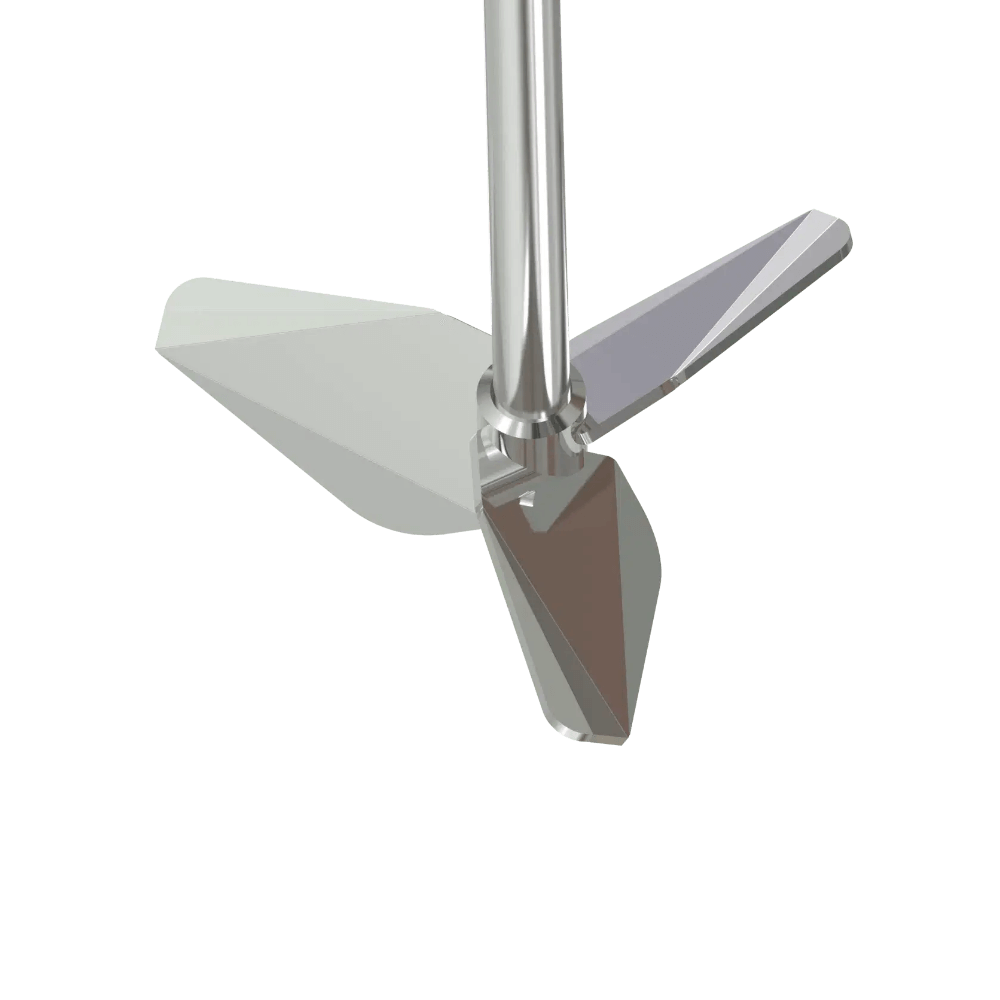
High-Flow Hydrofoil for Lactose Production
The Hydrofoil generates high-volume axial flow, making it a powerful solution for large crystallizers in lactose production. It prevents thermal stratification and keeps whey permeate and mother liquor in steady motion with minimal turbulence. The optimized blade profile turns drive power into fluid motion efficiently, supporting consistent homogenization at industrial scale.
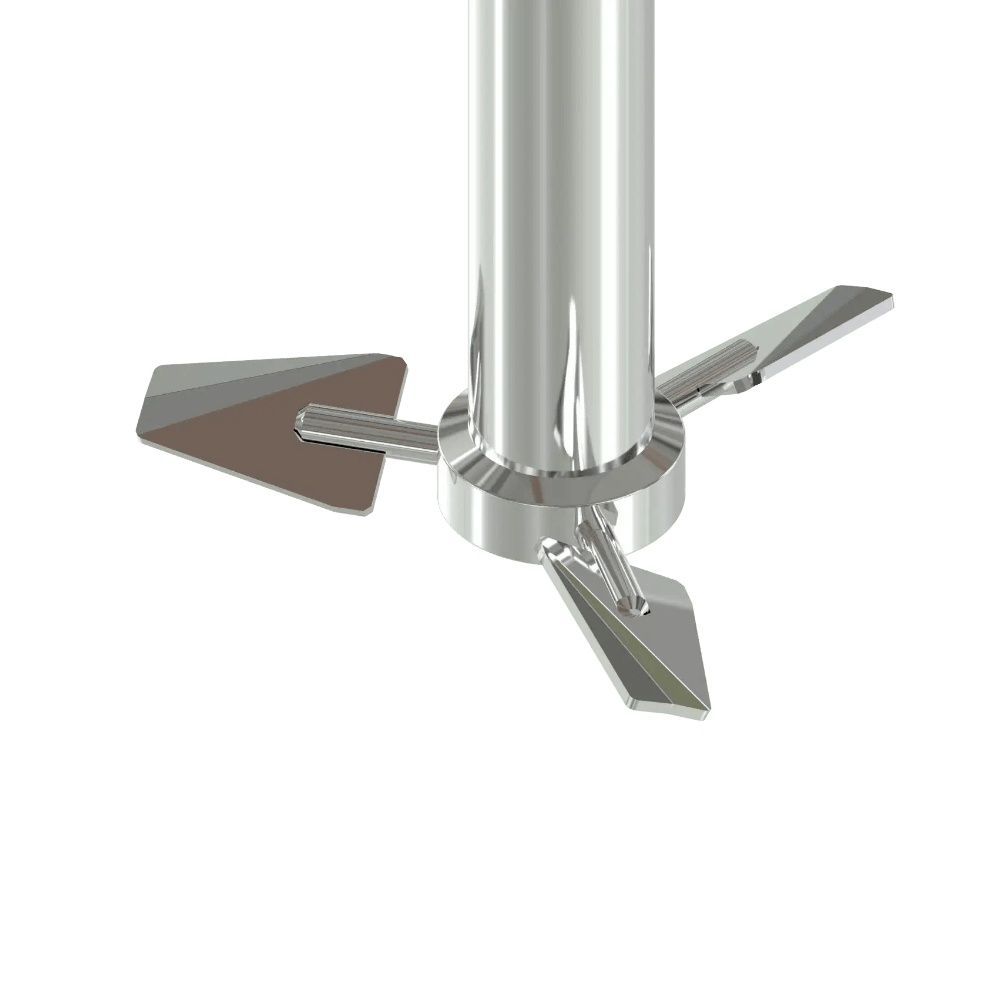
Reinforced Hydrofoil Pin for Demanding Lactose Production
The Hydrofoil Pin combines proven hydrofoil performance with reinforced pins for tougher substrates encountered in lactose production. Its structural design handles high-viscosity and high-solids zones where standard impellers might struggle, particularly when controlled crystal growth without shear damage becomes critical. It delivers reliable mixing where whey permeate and mother liquor are demanding to handle.
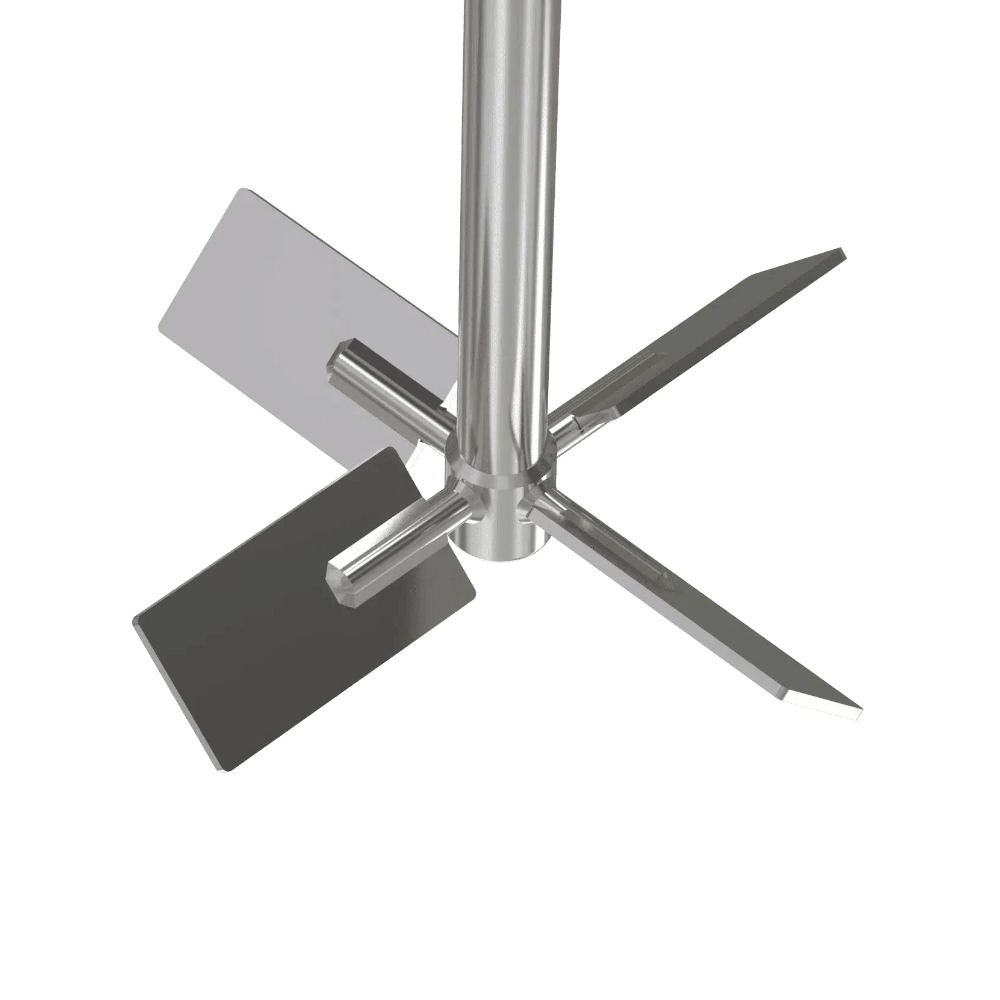
Reliable Axial Flow Turbine for Lactose Production
The Axial Flow Turbine is a dependable all-rounder for lactose production, ensuring even distribution of heat and additives throughout crystallizers. It prevents stagnant zones and keeps whey permeate and mother liquor in consistent motion across the vessel. Its cost-effective, robust design makes it a go-to choice for stable, continuous operation in lactose production.
Heavy-Duty Welded Turbine for Lactose Production
Built for maximum durability in continuous lactose production, this welded turbine eliminates bolted connections for superior mechanical integrity. Its smooth profile resists buildup of whey permeate and mother liquor and simplifies cleaning and maintenance in crystallizers. It is the preferred choice for industrial-scale lactose production that demand long service intervals and high reliability.
Axial Flow Turbine Pin for Challenging Lactose Production
Adapted for lactose production involving fibrous materials or high solids content, this turbine uses reinforced pins to cut through controlled crystal growth without shear damage. It maintains an effective mixing zone even when the composition of whey permeate and mother liquor varies from batch to batch. An essential element for facilities handling inconsistent or demanding substrates in lactose production.
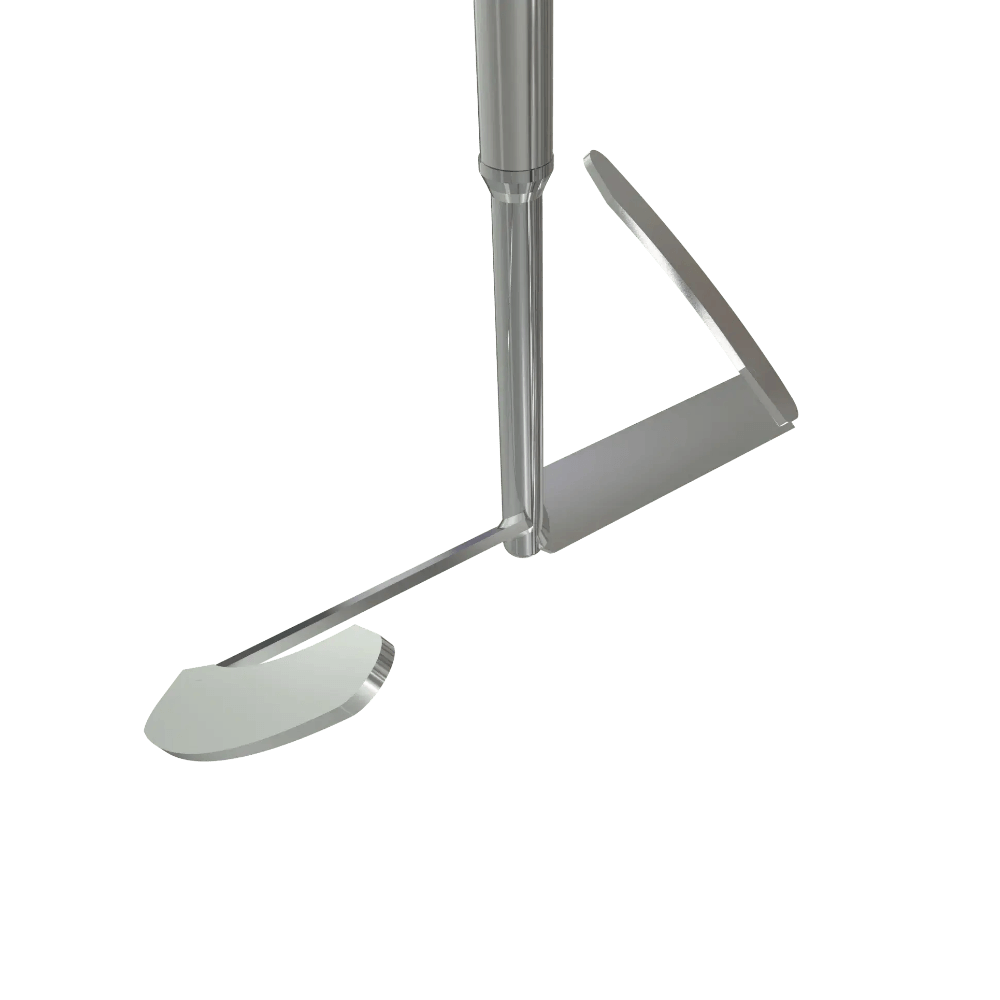
Anchor Mixer for High-Viscosity Lactose Production
The Anchor mixer is designed for lactose production with high viscosity, where whey permeate and mother liquor tend to build up on the tank walls. Its close-clearance blades sweep the walls of crystallizers, promoting heat transfer and preventing local hot spots or fouling. The ideal solution wherever intensive wall-to-wall homogenization is required.
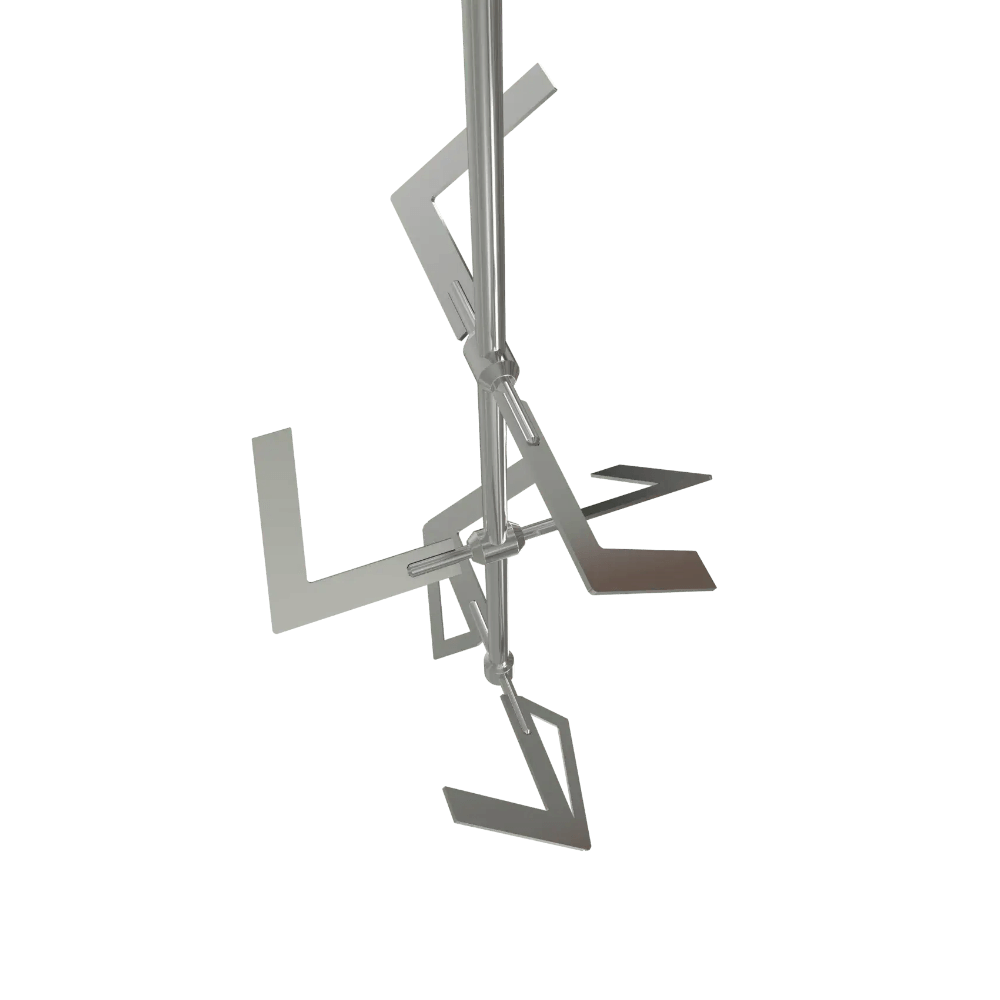
U-Z Turbine for Thorough Lactose Production Mixing
The U-Z Turbine combines strong axial flow with a geometry tailored to the demands of lactose production. It ensures complete homogenization of whey permeate and mother liquor in crystallizers while keeping shear forces controlled. A versatile solution for processors who need consistent blending across varying batch sizes and viscosities.
What is lactose intolerance?
Not everyone who has difficulty digesting lactose experiences the same symptoms, nor are they all considered lactose intolerant. Lactose intolerance is a condition that results from the body not producing enough lactase and results in physical symptoms such as abdominal bloating and cramps, diarrhea and flatulence. These symptoms occur because the small intestine can no longer digest lactose and the lactose enters the large intestine. The production of lactase is a biological process determined by our DNA. The prevalence of lactose intolerance is highest in people of East Asian descent and lowest in people of Northern European descent.
Lactose intolerance is very similar to a milk allergy, yet it is not the same. Allergic reactions to milk are the immune system’s response to the proteins (e.g., whey and casein) in milk. Lactose intolerance results from low lactase production and leads to physical reactions of the digestive system.
Frequently Asked Questions
What is lactose?
Lactose is known as “milk sugar” and is found naturally in the milk of mammals such as cows, goats, and humans. It’s present in varying amounts in milk products. Hard cheeses have less lactose due to whey removal and bacterial breakdown during aging.
Is lactose a natural or added sugar?
Lactose can be both natural and added sugar. It’s natural in mammalian milk but can also be crystallized and added to products like sauces and desserts. Lactose in plain milk is natural, while added lactose in packaged foods is considered added sugar.
How is lactose digested?
Lactose digestion occurs in the small intestine with the help of the enzyme lactase, breaking it down into glucose and galactose for absorption. Lactase production decreases with age, leading to potential lactose intolerance in many adults worldwide.
What is lactose intolerance?
Lactose intolerance is a condition where the body doesn’t produce enough lactase, resulting in symptoms like bloating, cramps, and diarrhea. It differs from a milk allergy, which is an immune response to milk proteins, rather than lactose itself.
Who experiences lactose intolerance?
Lactose intolerance affects individuals differently, with varying symptoms. It’s most prevalent in East Asian populations and least common in Northern Europeans. The condition arises from genetic factors influencing lactase production after infancy.
Food & Beverages Contacts

Sales Director
Tom Pruymboom

Area Sales Manager
Teun van der Spek

Application Engineer
Sijko van der Veen
Dairy - Related Articles
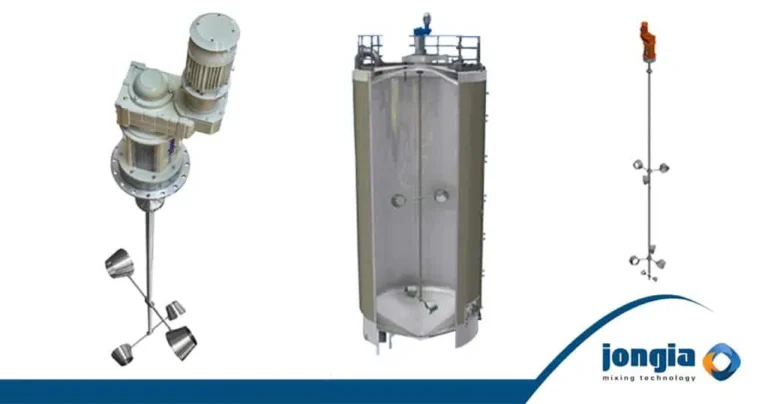
Homogenization and Cooling in Diary Cream Production
Utilizing Jongia’s Cup Mixer Homogenization is a standard procedure employed in dairy cream production to ensure the consistent distribution of
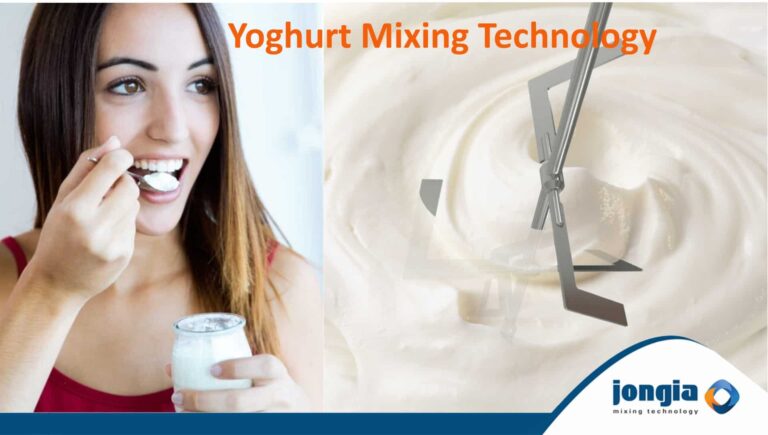
The Jongia UZ-Mixing element: from application to solution
The Jongia U-Z Mixing element, from application to solution Using the UZ-Mixing Element is not the solution for every application.

Foaming and air entrapment common to mixing processes
Jongia Mixing Technology has initiated many mixing processes worldwide with its agitators. In some of these mixing processes, the elimination
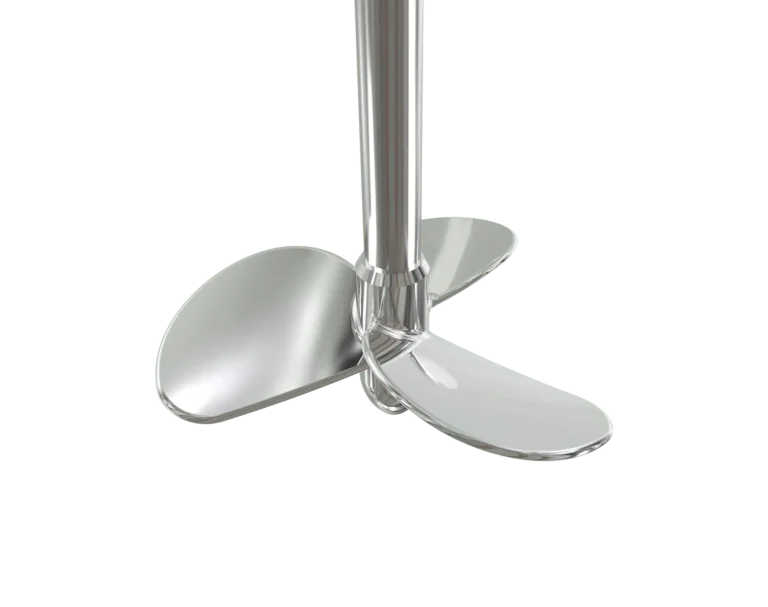
Jongia propellers are a valuable addition to the mixing process
Product friendly propellers are an indispensable part of our customers’ mixing process. Especially in the dairy industry, where slightly viscous