



Starch
Products containing starch are often very popular with people. This is because products containing starch are the primary source of carbohydrates. They play a crucial role in a nutritious and balanced diet. Starch provides the body with glucose. An important source of energy that the body absorbs quickly. Besides containing good nutrients, starch can also enhance products. For example, starch is used as a binding agent in soups, sauces and various puddings. Products that contain natural sources of starch are: corn, white rice, wheat and potatoes.
What is starch?
There are different types of types of starch, refined or unrefined. The type of starch that is refined contains many more other nutrients and is considered a source of energy that also provides energy quickly. Unrefined starch is seen as “normal starch” where the body takes much longer to process these carbohydrates.
However, it is that with too much starch, the small intestine can no longer digest it. Because of this it goes to the large intestine, when it reaches the large intestine the starch is digested a lot slower.
Starch is a natural polymer, which means it is a long chain made up of one type of molecule. Starch is made up of glucose molecules. It can occur in two forms: amylose and amylopectin. The ratio is often 30% amoylose and 70% amylopectin.
Different plants contain different ratios of polysaccharide units. Plants make these starch polymers to store the glucose they produce during photosynthesis. This is also often called the food reserve for plants.
Mixing elements for Starch Processing
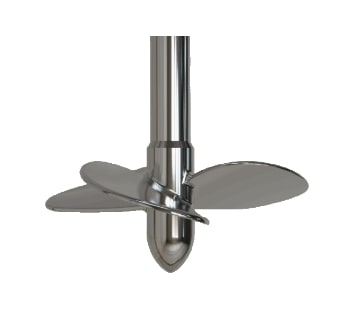
Versatile Propeller Mixer for Starch Processing
The Propeller is a workhorse in starch processing, keeping starch slurries and hydrolysates in uniform suspension inside slurry and reaction tanks. Its axial flow prevents settling and ensures consistent distribution of every component throughout the batch. Energy-efficient and reliable, it adapts to the viscosity changes typical of starch processing without loss of performance.
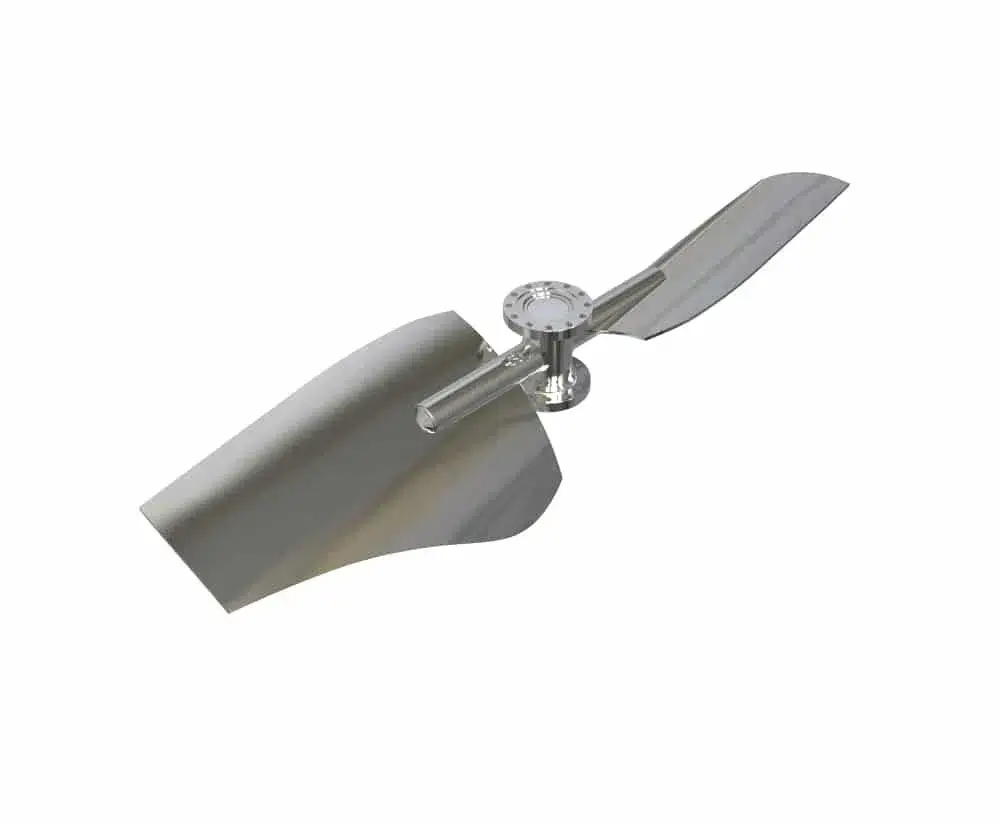
High-Capacity Hydroprop for Starch Processing
The Hydroprop delivers outstanding pumping capacity with minimal energy input, making it ideal for large slurry and reaction tanks in starch processing. It ensures complete tank turnover, eliminates temperature gradients, and keeps starch slurries and hydrolysates in a stable, homogeneous state. Its streamlined design cuts operating costs while supporting continuous, high-volume starch processing.
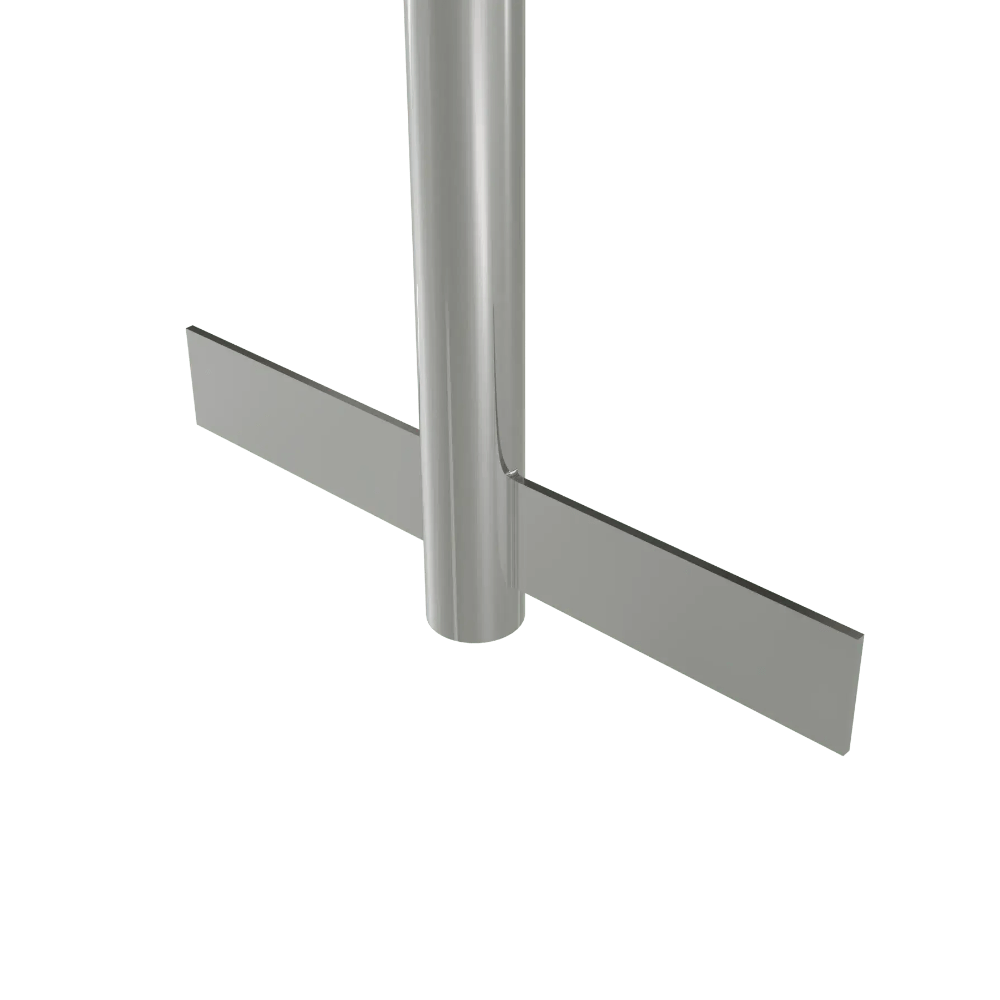
Robust Flatblade Turbine for Starch Processing
The Flatblade turbine generates strong radial flow and turbulence, tackling preventing settling of starch granules head-on in starch processing. It breaks up agglomerates, disperses additives, and homogenizes starch slurries and hydrolysates even when viscosity fluctuates. Its rugged construction handles the mechanical demands of industrial starch processing with proven reliability.
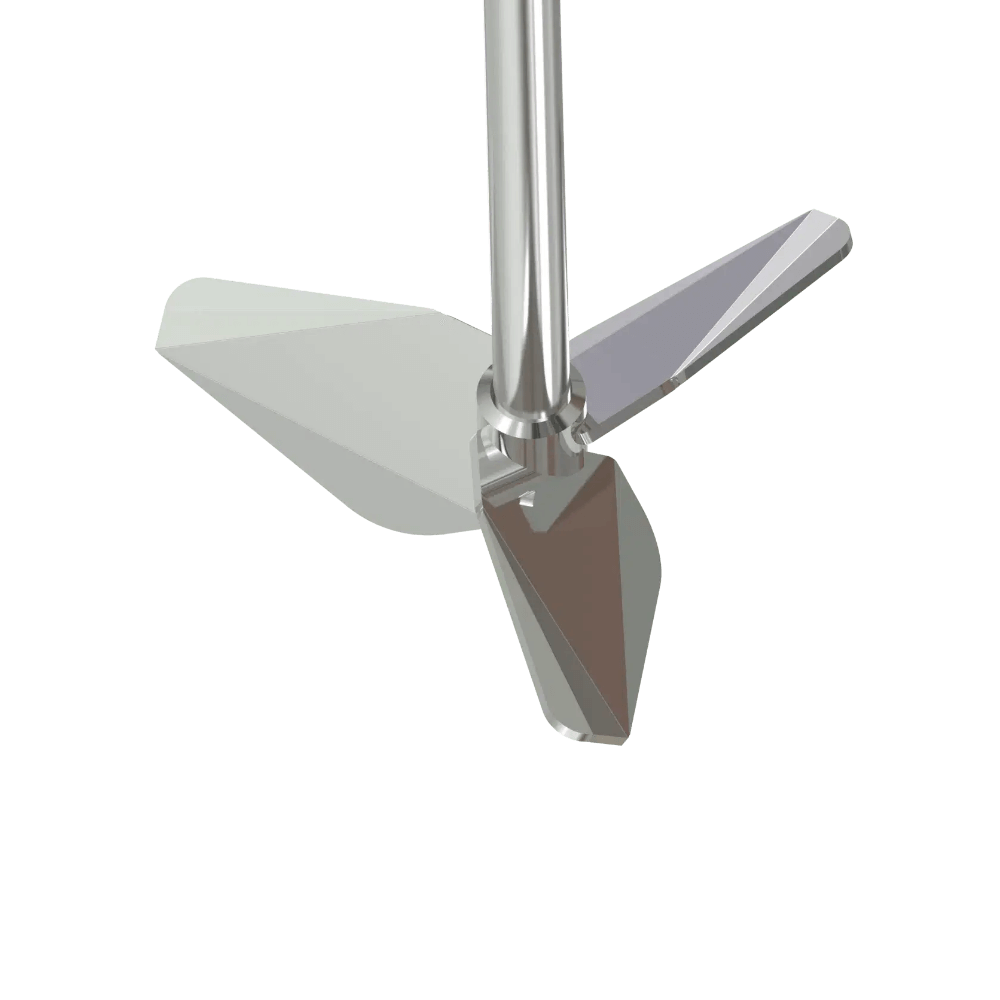
High-Flow Hydrofoil for Starch Processing
The Hydrofoil generates high-volume axial flow, making it a powerful solution for large slurry and reaction tanks in starch processing. It prevents thermal stratification and keeps starch slurries and hydrolysates in steady motion with minimal turbulence. The optimized blade profile turns drive power into fluid motion efficiently, supporting consistent homogenization at industrial scale.
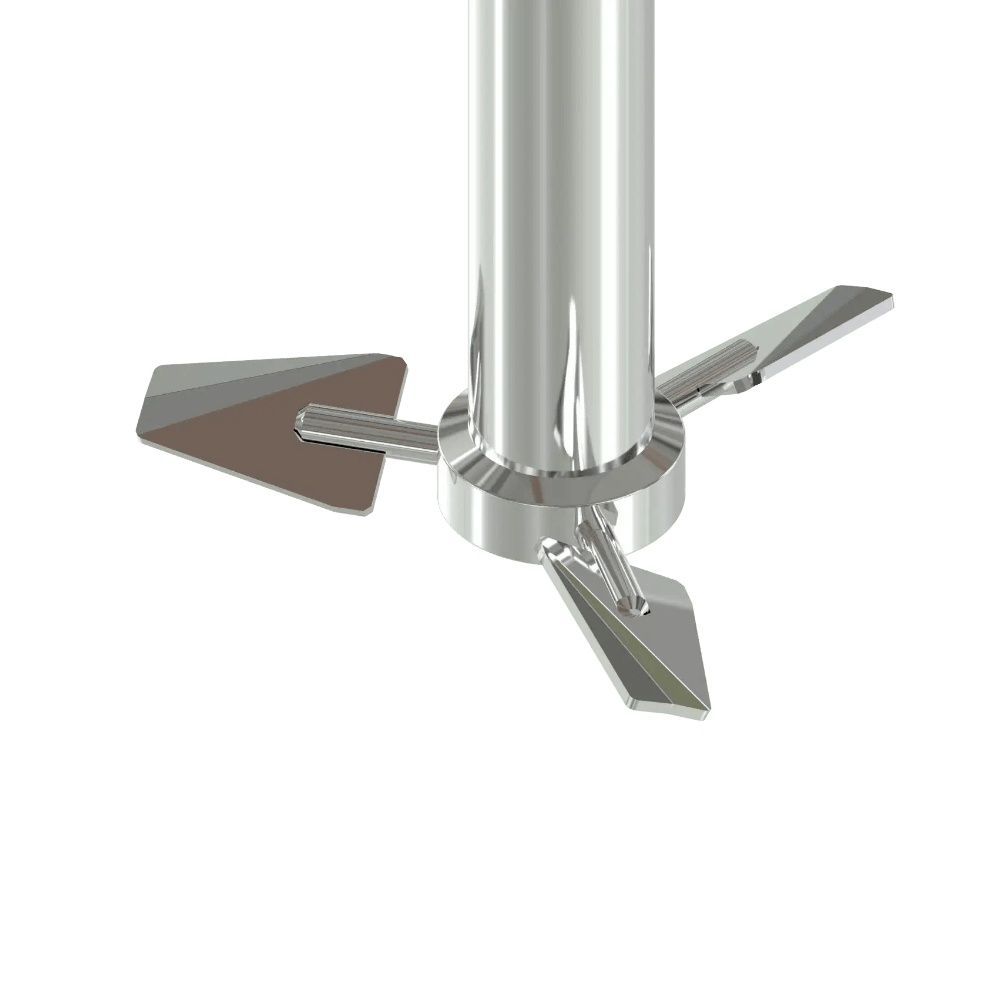
Reinforced Hydrofoil Pin for Demanding Starch Processing
The Hydrofoil Pin combines proven hydrofoil performance with reinforced pins for tougher substrates encountered in starch processing. Its structural design handles high-viscosity and high-solids zones where standard impellers might struggle, particularly when preventing settling of starch granules becomes critical. It delivers reliable mixing where starch slurries and hydrolysates are demanding to handle.
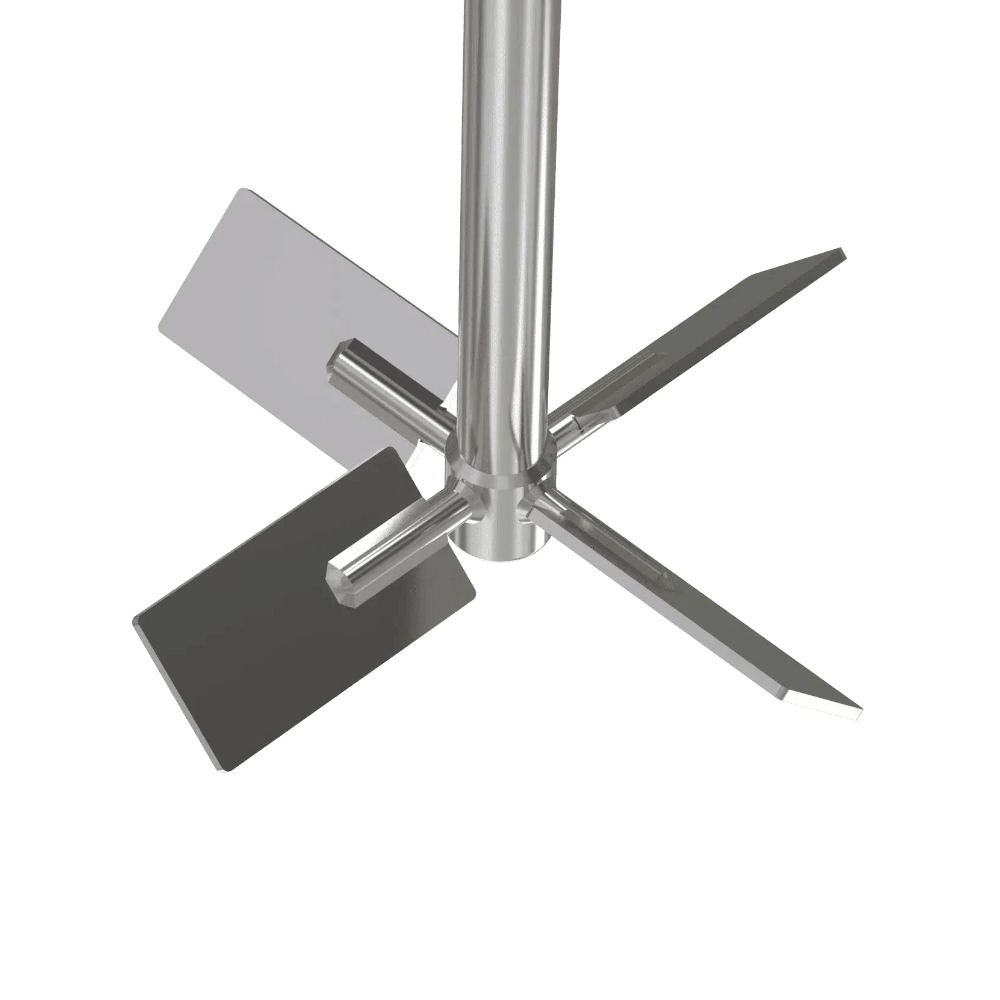
Reliable Axial Flow Turbine for Starch Processing
The Axial Flow Turbine is a dependable all-rounder for starch processing, ensuring even distribution of heat and additives throughout slurry and reaction tanks. It prevents stagnant zones and keeps starch slurries and hydrolysates in consistent motion across the vessel. Its cost-effective, robust design makes it a go-to choice for stable, continuous operation in starch processing.
Heavy-Duty Welded Turbine for Starch Processing
Built for maximum durability in continuous starch processing, this welded turbine eliminates bolted connections for superior mechanical integrity. Its smooth profile resists buildup of starch slurries and hydrolysates and simplifies cleaning and maintenance in slurry and reaction tanks. It is the preferred choice for industrial-scale starch processing that demand long service intervals and high reliability.
Axial Flow Turbine Pin for Challenging Starch Processing
Adapted for starch processing involving fibrous materials or high solids content, this turbine uses reinforced pins to cut through preventing settling of starch granules. It maintains an effective mixing zone even when the composition of starch slurries and hydrolysates varies from batch to batch. An essential element for facilities handling inconsistent or demanding substrates in starch processing.
Market development of starch
In recent years, Canada, the United States and Japan have experienced significant growth in the starch market. We also see that these countries increasingly recognize the importance of starch. The number of starch-rich products is increasing as more and more manufacturers recognize the positive properties of starch.
Currently, the United States is the largest starch producer in the world. In 2021, the country had an estimated production of 33.4 million tons. Due to these large production numbers, the country has a 27% share over the total starch market. The second largest producer entity is China, with an estimated production of 31.1 million tons.
The starch market and starch processing are expected to grow substantially. The drivers for a growing market are in Asia. Many countries in this continent will jump into starch production in the coming years. These include the Philippines, South Korea, India and Thailand
Production of Starch
Milling is the process during which the raw materials for the production of starches are ground as finely as possible. Starch slurry, which is quite viscous, must be kept homogeneous and in in-line processing thickeners are added to the slurry. For this purpose a Jongia mixer type L, fitted with hydrofoils and/or axial flow turbines can be used.
Energy consumption and mixing efficiency are the keywords when we select the mixer for required duty. Over and over again Jongia has proven that it is indeed possible to achieve maximum results with minimum power input. We go as far as to use only half the installed power that our competitors feel would be required. In our opinion a 200 m3 starch slurry vessel can be kept in suspension with as little as 5.5 kW.
Jongia’s robust construction parameters as well as its innovative design are the prime reasons why our clients choose to work with us.
Jongia’s mixers are hygienically designed, witness the sanitary coupling. Long shafts without bottom bearing, surface finishes in various degrees of fineness , these are all part of the options you can choose from in consultation with our experts.
Frequently Asked Questions
What is starch?
Starch is a natural polymer made from glucose molecules. It exists in two forms: amylose and amylopectin. Refined starch is richer in nutrients and provides quick energy, while unrefined starch is processed more slowly by the body.
What is the role of starch in a diet?
Starch is a key source of carbohydrates and essential in a balanced diet. It provides glucose, a quick source of energy, and enhances various food products, acting as a binding agent in soups, sauces, and puddings.
Where is starch commonly found?
Starch is abundant in natural sources like corn, white rice, wheat, and potatoes. These foods are widely popular due to their carbohydrate content and nutritional value, making them staples in many diets globally.
How is starch production evolving?
The starch market has seen significant growth in recent years, especially in Canada, the U.S., and Japan. The U.S. is the largest producer, followed by China, with increasing production expected in Asian countries like India and Thailand.
What are the key factors in starch processing?
Effective starch processing relies on efficient mixing and energy management. Jongia mixers, designed for optimal performance, utilize advanced technology to maintain homogeneous starch slurry while minimizing energy consumption, ensuring maximum productivity with lower power input.
Food & Beverages Contacts

Sales Director
Tom Pruymboom

Area Sales Manager
Teun van der Spek

Application Engineer
Sijko van der Veen
Food & Beverages - Related Articles
Fermentation & Bioreactor Mixing Process
Bioreactors and Fermenters are culture systems to produce cells or organisms. They are used in various applications, including basic research and development, and the manufacturing of biopharmaceuticals, food and food additives, chemicals, and other products. A broad range of cell types and organisms can be cultivated in bioreactors and Fermenters, including cells (like mammalian cell lines, insect cells, and stem cells), microorganisms (like bacteria, yeasts, and fungi), as well as plant cells and algae. The words “Bioreactor” and “Fermenter” are basically the same thing.
How to avoid foaming in your mixing process?
Through years of experience, Jongia Mixing Technology knows the correct application to many mixing processes. So too with mixing processes
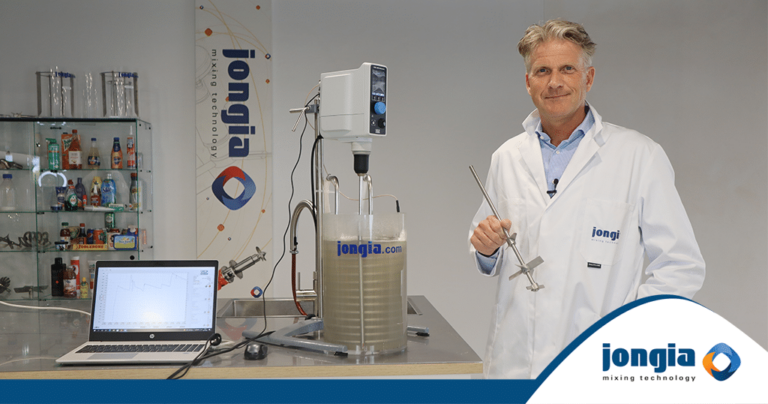
Tutorial: starch gelatinization – from raw starch to glucose syrup
Around the world, Jongia Mixing Technology has initiated numerous mixing processes using its agitators to produce modifications from raw starch
Starch gelatinization: corn starch as base for marshmallows
Jongia Mixing Technology is active within various fields with a great number of process solutions. One of these fields is